Luxating Patella in Dogs: Grades, Signs and Living with Mila's Grade 4 Luxation

In short
- A luxating patella is a kneecap that slips out of its groove. Vets grade it from 1 (mild) to 4 (permanently out of place).
- Around 1 in 77 dogs seen by UK vets has a diagnosed luxating patella, and small breeds, including French Bulldogs, are more prone to it.
- Skipping, hopping on a back leg and stiffness after rest are the classic signs. Your vet confirms the grade and the plan.
- Arthritis often follows in the knee over time, so a calm daily comfort routine matters.
- Our Frenchie Mila has a grade 4 luxating patella, and she has also snapped the cruciate ligament in the same leg. Below is exactly how her days and evenings work, and what other owners have told us.
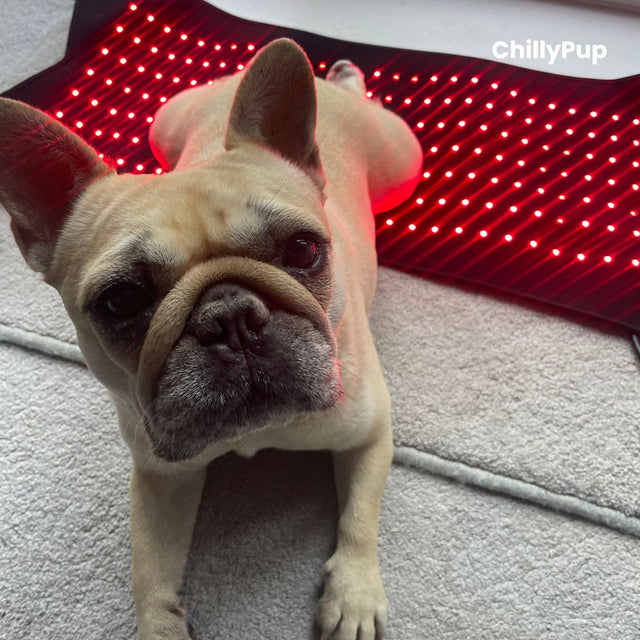
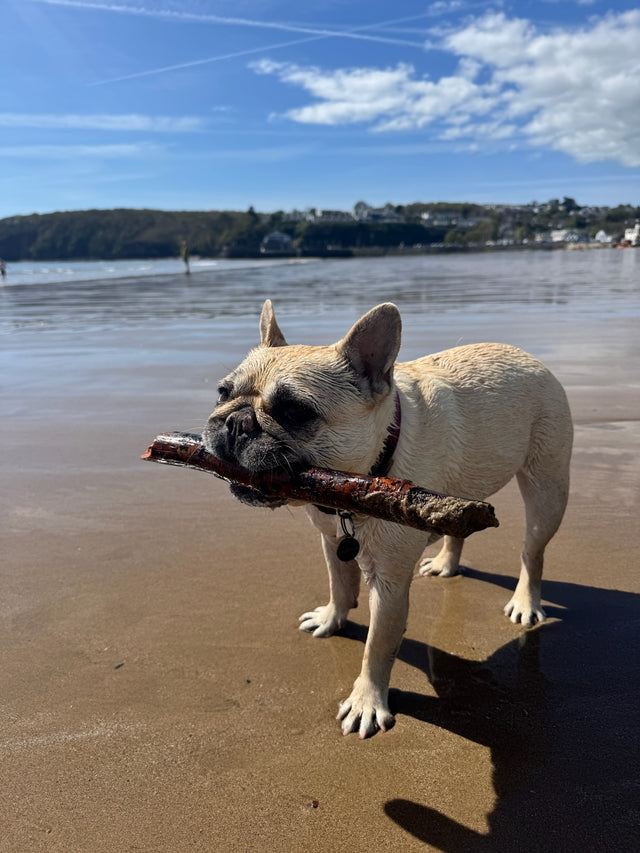
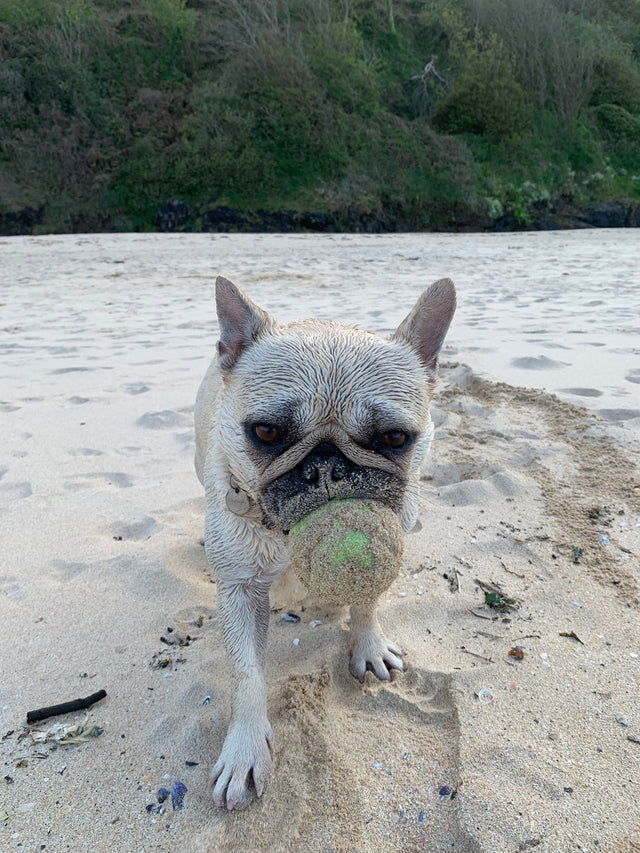
Mila is our 8-year-old French Bulldog and the reason ChillyPup exists. She has a grade 4 luxating patella in her left back leg, the highest grade there is, a snapped cruciate ligament in that same leg, and arthritis alongside it. She still loves an adventure and still refuses to be carried anywhere, so a lot of our home life is built around keeping her comfortable and moving at her own pace.
If your vet has just said the words "luxating patella", this article covers what it means, how the grades work, what to watch for and what a realistic daily routine looks like. We are dog owners, not vets, so anything about diagnosis or treatment is always a conversation for your vet.
Shop the red light rangeFind the right fit
What is a luxating patella?
The patella is the kneecap. It normally sits in a groove at the bottom of the thigh bone and glides up and down as the leg bends. In a luxating patella, the kneecap slips out of that groove, usually towards the inside of the knee (medial), sometimes towards the outside (lateral). While it is out of place, the leg cannot straighten properly, which is why many dogs skip or hold the leg up for a few steps.
The four grades explained
Vets grade luxating patella from 1 to 4 depending on how easily the kneecap moves out of place and whether it goes back on its own.[2]
| Grade | What happens to the kneecap | What owners often notice |
|---|---|---|
| Grade 1 | Can be pushed out by a vet but pops straight back. Does not slip during normal walking. | Often nothing at all. |
| Grade 2 | The most common grade. Sits in place most of the time and slips out now and then, often during exercise. | An occasional skip or a few hops on three legs. |
| Grade 3 | Out of the groove most of the time. Can be pushed back but does not stay. | A more regular skip, an odd gait, stiffness. |
| Grade 4 | The rarest and most severe grade. Permanently out of place and cannot be pushed back. | A changed way of walking, and stiffness after rest as arthritis develops. |
How common is it, and is it common in French Bulldogs?
A large UK study of dogs attending primary care vets in England found that 1.3% had a diagnosed luxating patella, roughly 1 in 77 dogs.[1] Pomeranians and Yorkshire Terriers were among the breeds most at risk compared with crossbreeds, and dogs below the average weight for their breed were also more likely to be affected.[1] UK charity vets list French Bulldogs among the small breeds predisposed to it, alongside Chihuahuas, Pomeranians, Yorkshire Terriers, Toy Poodles and Boston Terriers.[3]
In that same UK study, around 39% of dogs with a diagnosis were managed medically and around 13% had surgery.[1] So most dogs live with it day to day rather than going straight to an operation.
Signs to look out for
- Skipping or hopping on a back leg for a few strides, then carrying on as normal
- A sudden limp that comes and goes
- Stiffness when getting up after a rest
- Hesitating before jumping onto the sofa or into the car
- Sensitivity when the knee is touched[3]
Book a vet appointment if you notice:
- Your dog will not put any weight on a back leg
- A sudden change in how they walk, or crying out when the leg moves
- Skipping that is happening more often than it used to
How it is usually managed
Your vet will examine the knee, confirm the grade and talk you through options. As a general guide, grades 1 and 2 are often managed with weight control, physiotherapy, a muscle-building exercise plan and medication where needed. Grades 3 and 4 are more often considered for surgery, which realigns the bones and deepens the groove the kneecap sits in.[3] Every dog is different, and the right plan depends on age, other health conditions and how the dog copes day to day.
One thing worth knowing early: arthritis in the affected knee is very common over time.[3] That is why the everyday routine matters so much, long after the diagnosis.
Living with it at home
- Keep them lean. Every extra kilo is extra load on the knee.
- Little and often. Steady, regular walks suit most dogs better than one long weekend hike.
- Grip underfoot. Rugs or runners on wooden and tiled floors stop slips and scrabbles.
- Ramps and steps. Mila hates being carried, so steps up to the sofa and a ramp for the car let her get about on her own terms.
- Short nails. Long nails change how a dog stands and grips.
- A warm, supportive bed. Stiffness tends to show most after resting on a cold or hard surface.
Where red light therapy fits in Mila's routine
Because Mila's left back leg has never been straight, we decided against surgery when she snapped her cruciate ligament. Straightening that leg would have put more pressure on her spine and her other back leg, and we did not want her to go through one operation only to need another. So we manage it, knowing it is for the rest of her life. Our article on cruciate injuries explains that decision in full.
We started red light therapy with Mila with a simple thought: if it made even a 10% difference to how comfortable she felt, it was worth it. It is not a miracle and we would never describe it as one, but we are genuinely glad we tried it, and it has become one of the calmest parts of her day.
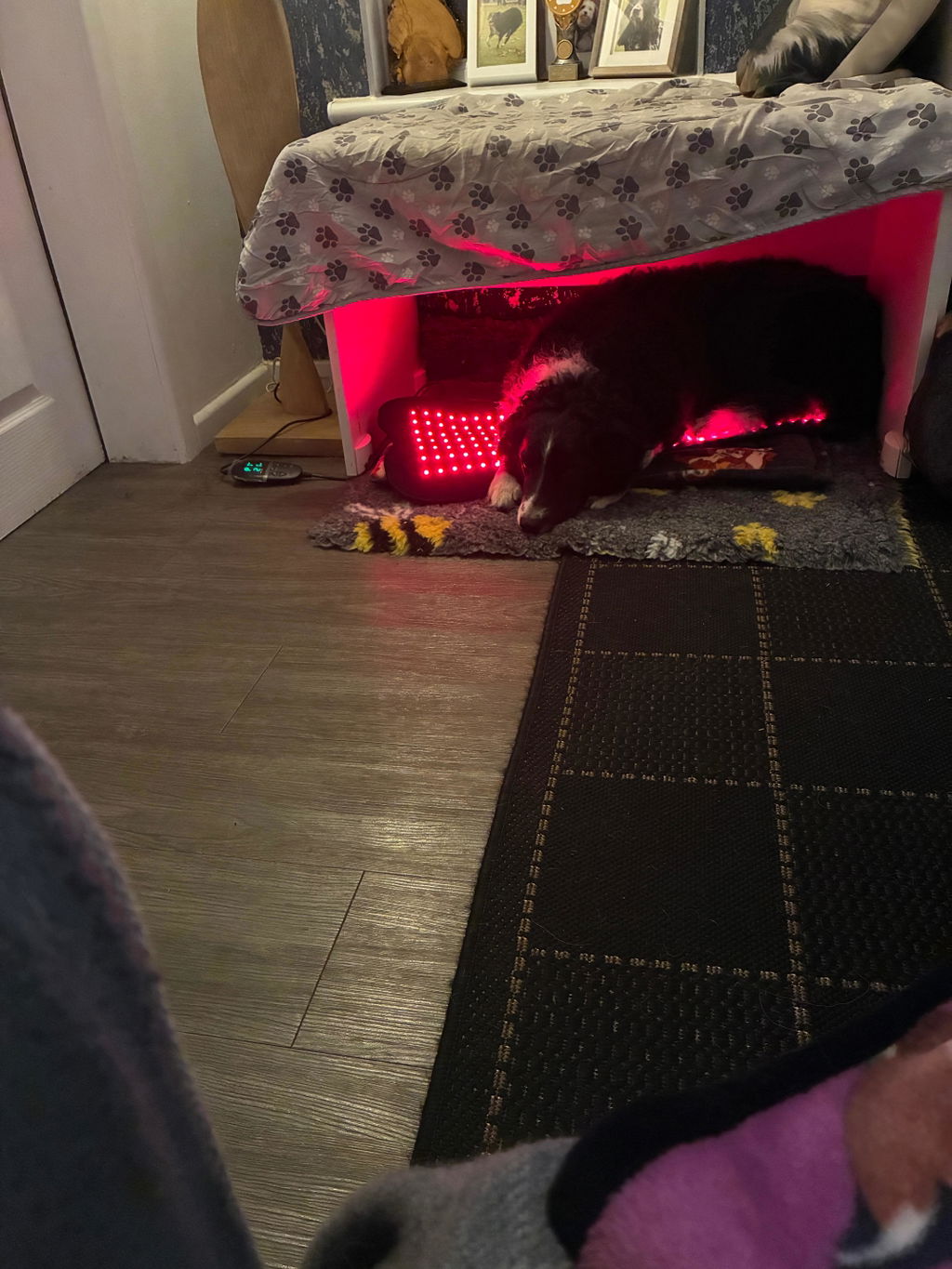
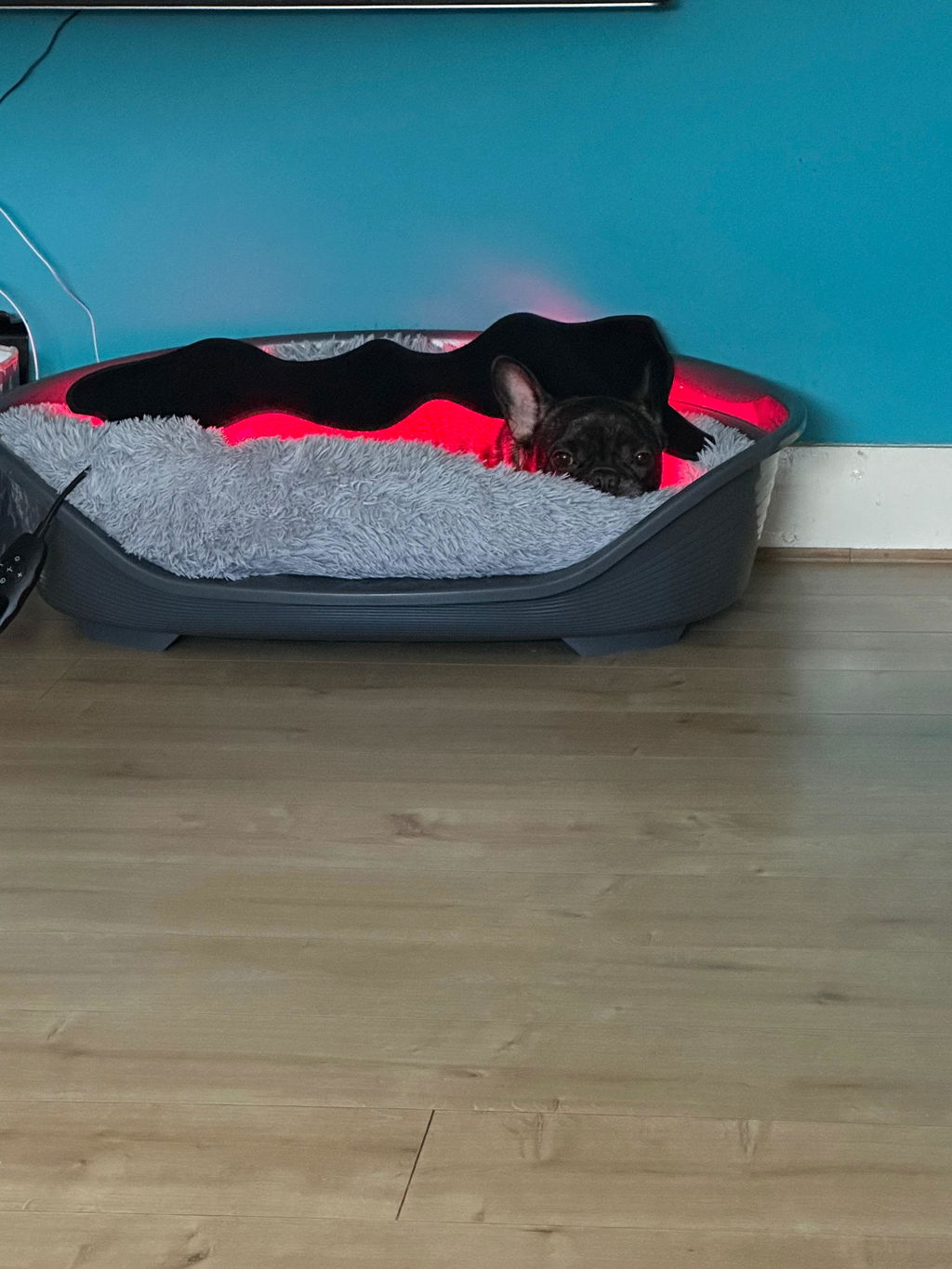
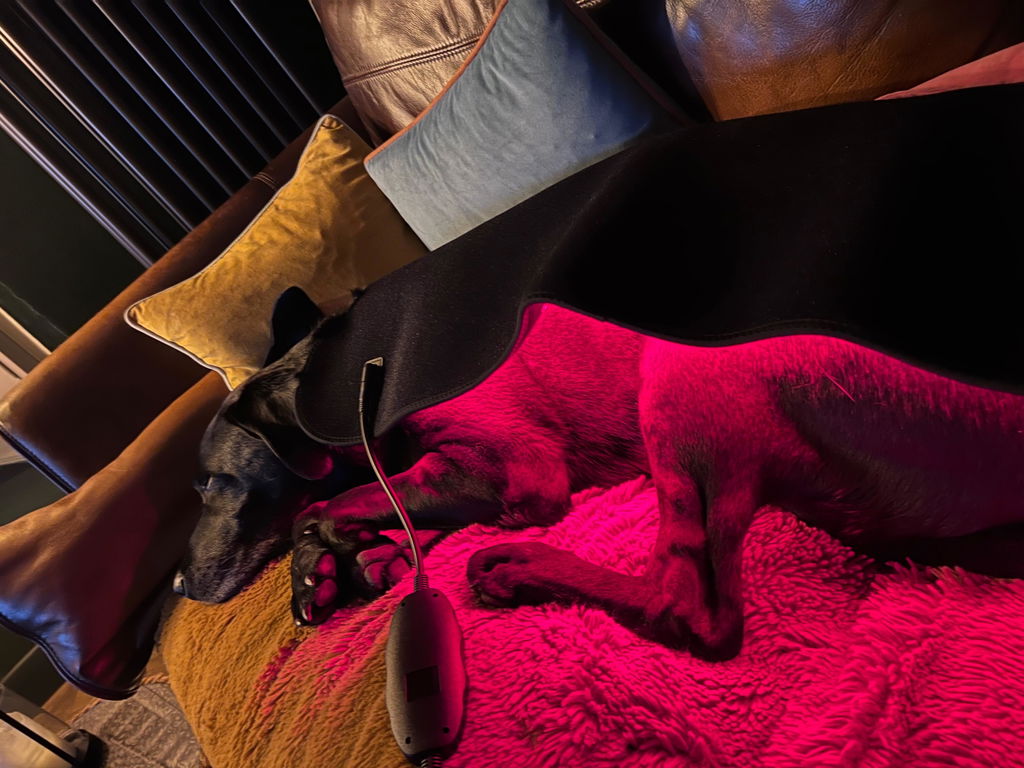
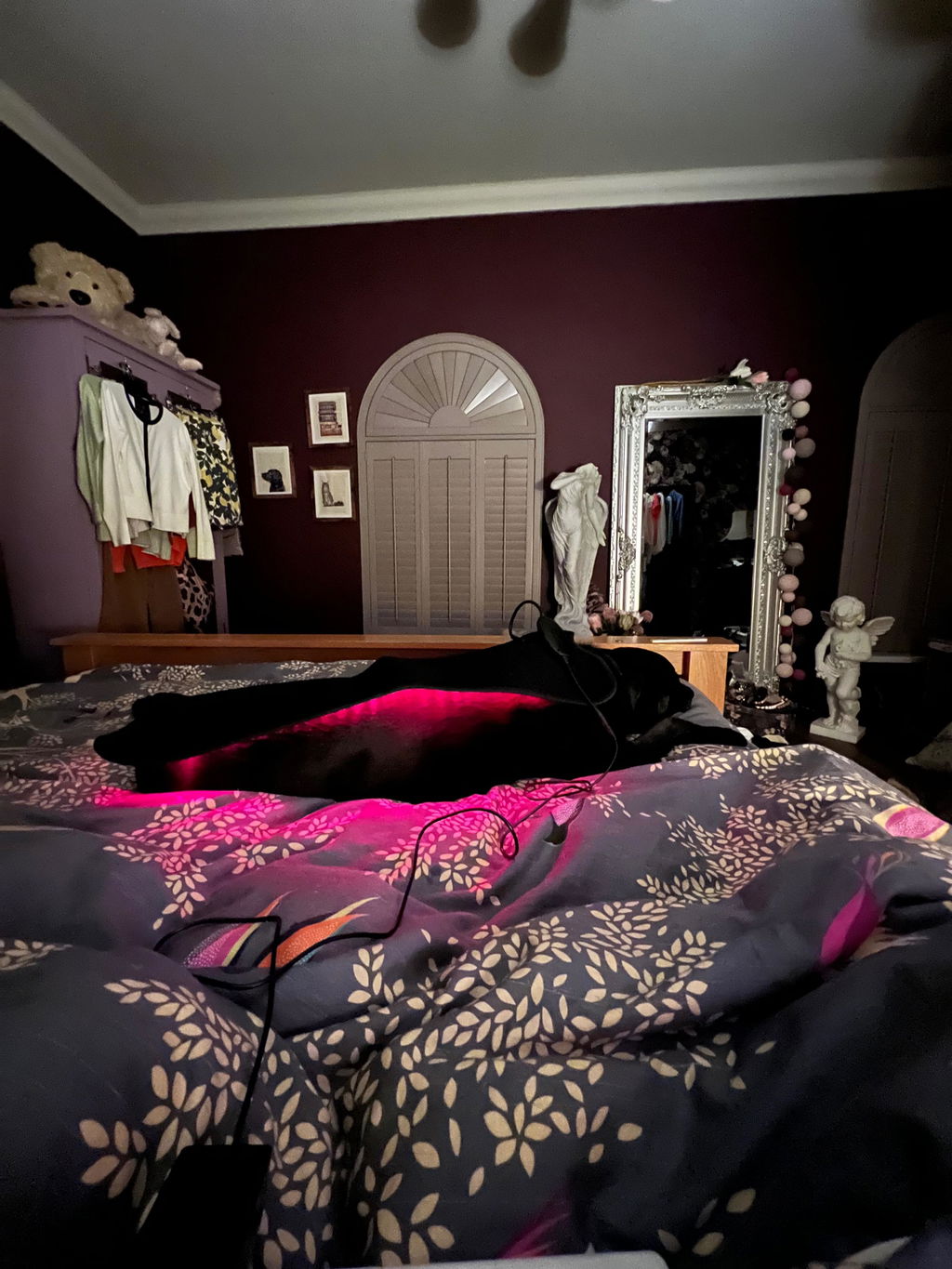
Evenings, every day. When we are settled watching TV, Mila has her Large Red Light Therapy Pad wrapped around her on the steady Constant light setting. She is on P1 or P2 most days and up to P5 on her stiffer days. She usually falls asleep within a few minutes and sleeps through the whole 15 to 20 minutes.
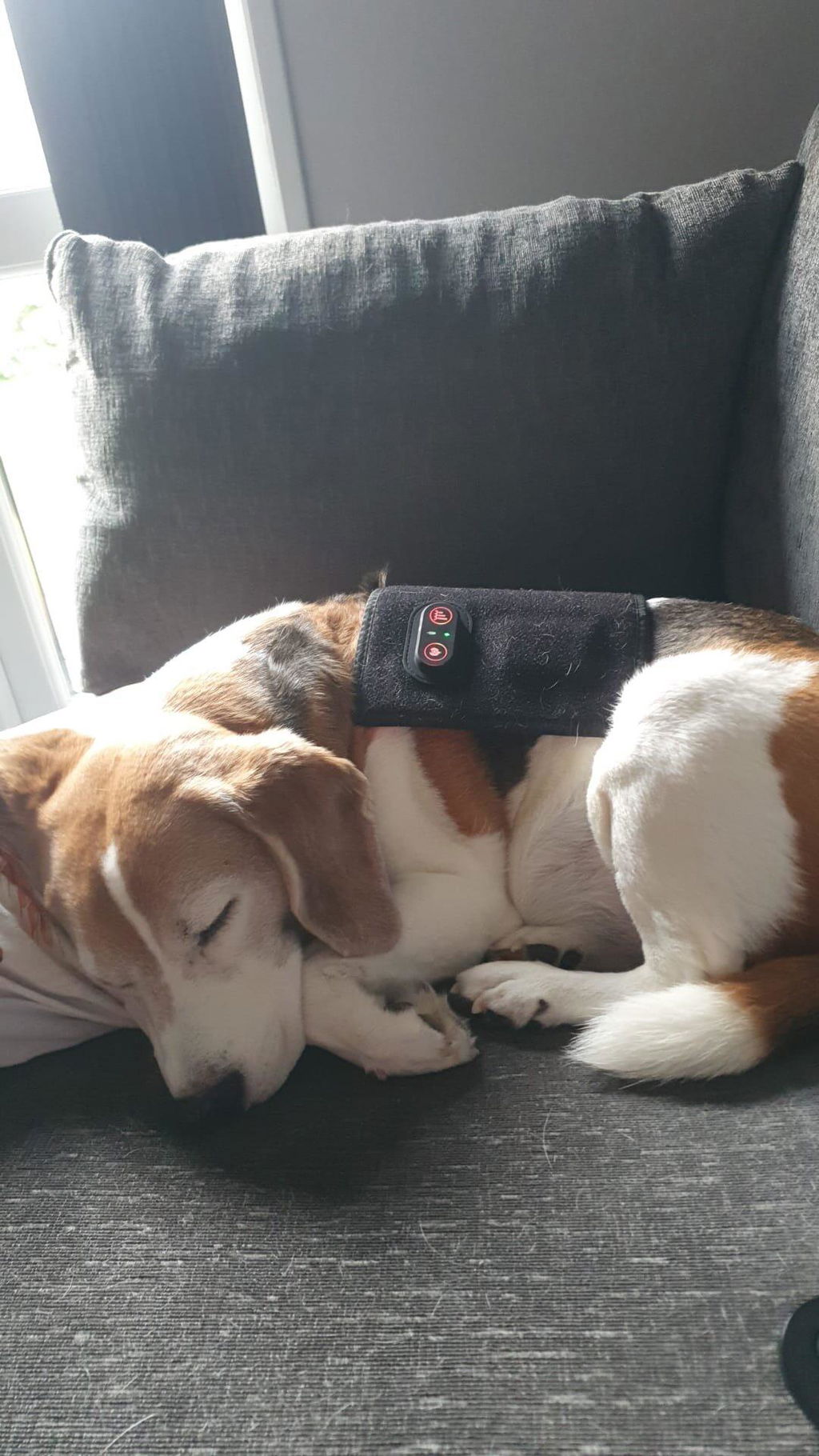
Achy days and days out. On days when her left back leg is clearly feeling it, or when we are away from home, she has the Leg Wrap on that leg instead. It is cordless, so it goes wherever we go.
One specific spot. When she is a bit achy in one particular area, we use the Small Cordless Pad on just that spot.
She never has all three at once. One product, one calm session, most days of the week. The biggest lesson from our own experience is that consistency matters far more than session length: 10 to 15 minutes, most days, built up over weeks and months.

What other owners tell us
These are real reviews left by ChillyPup customers, quoted word for word with the photos they added. Every dog is different, and you can read all of our reviews on our reviews page.
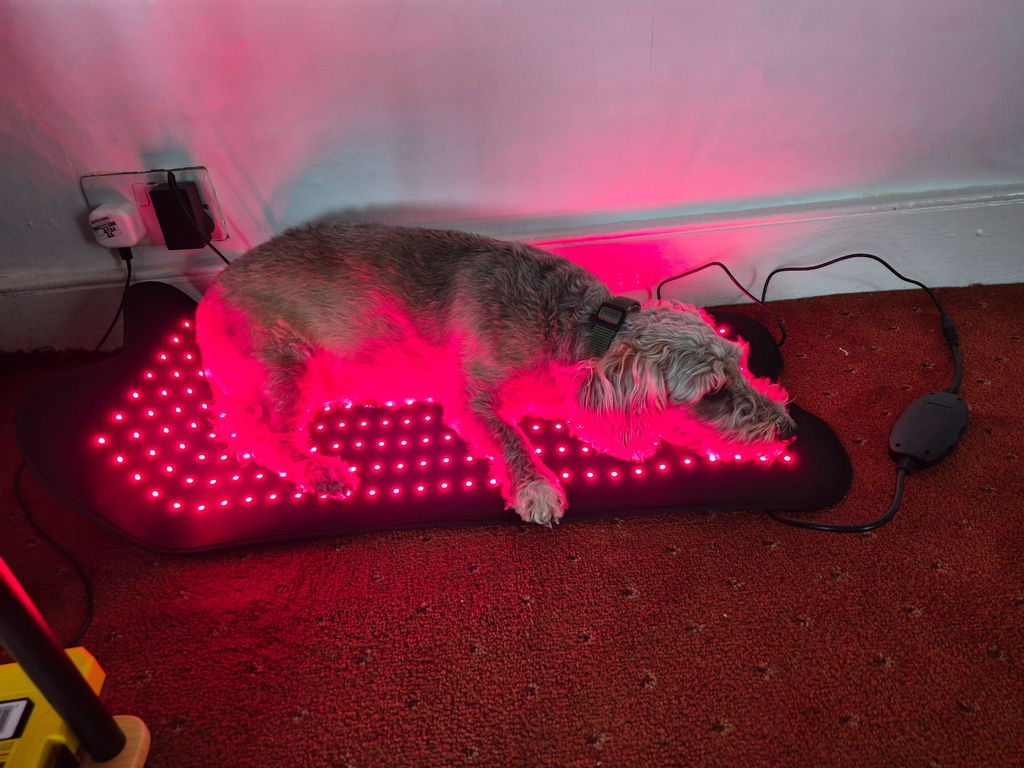
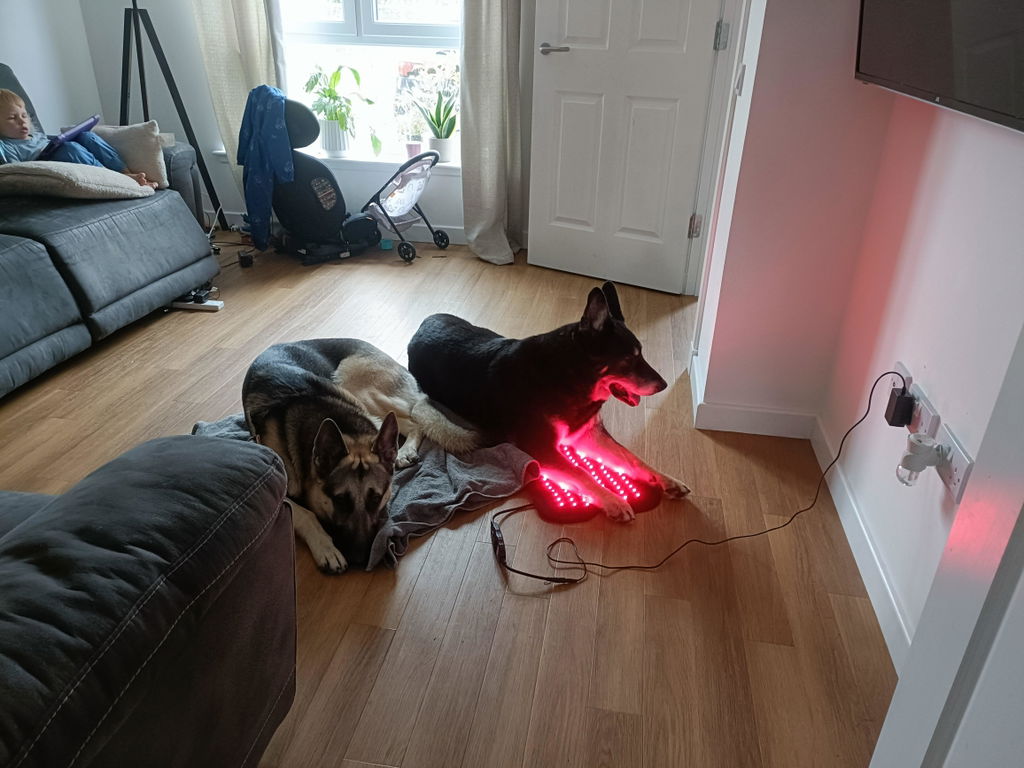
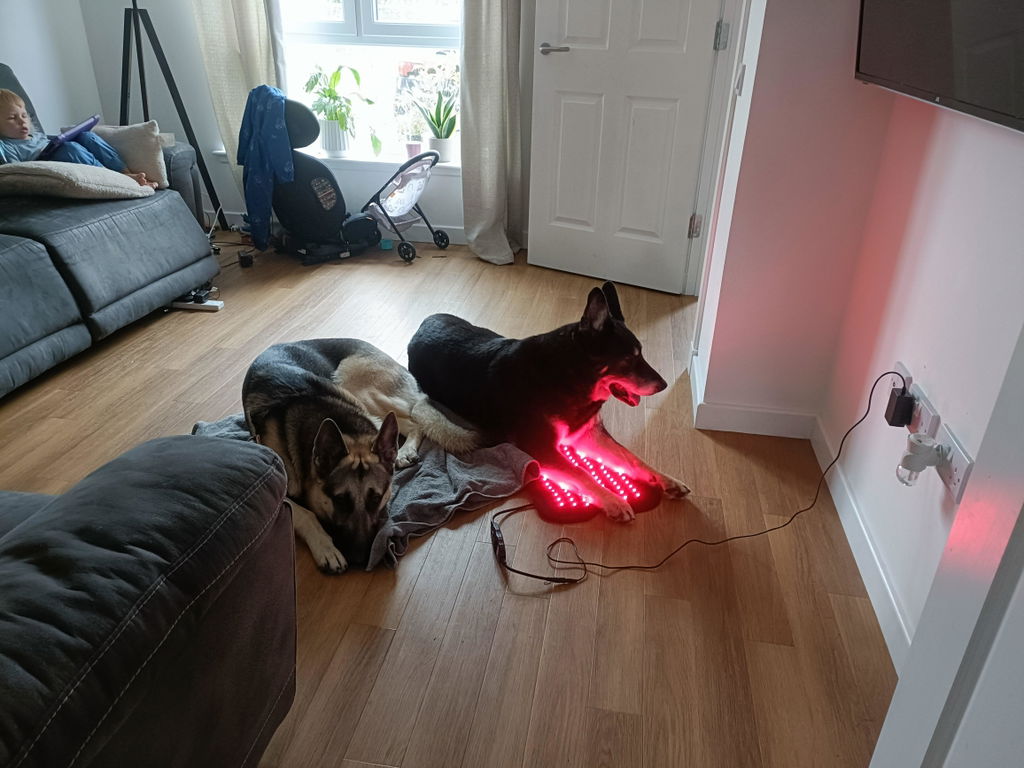
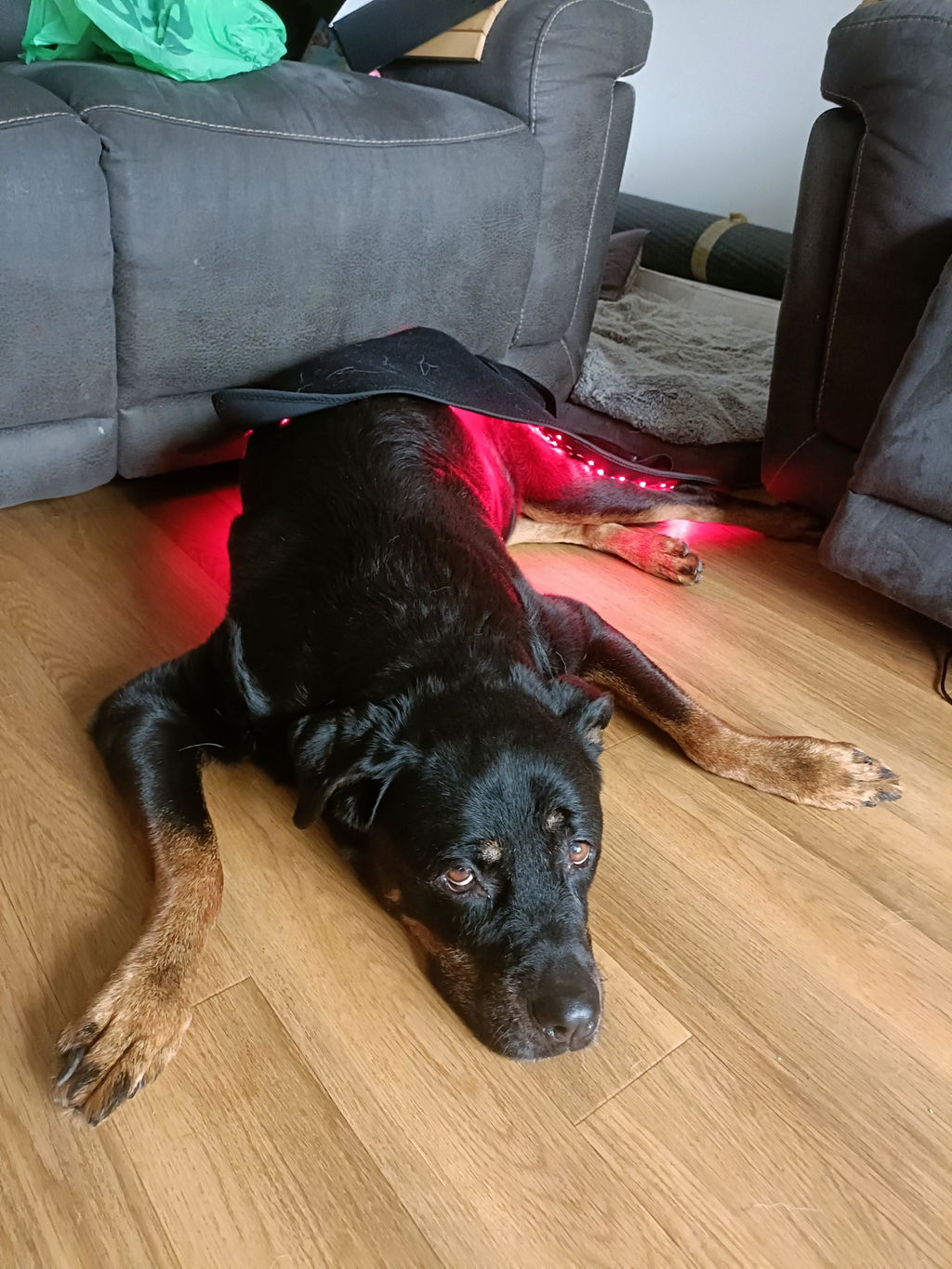
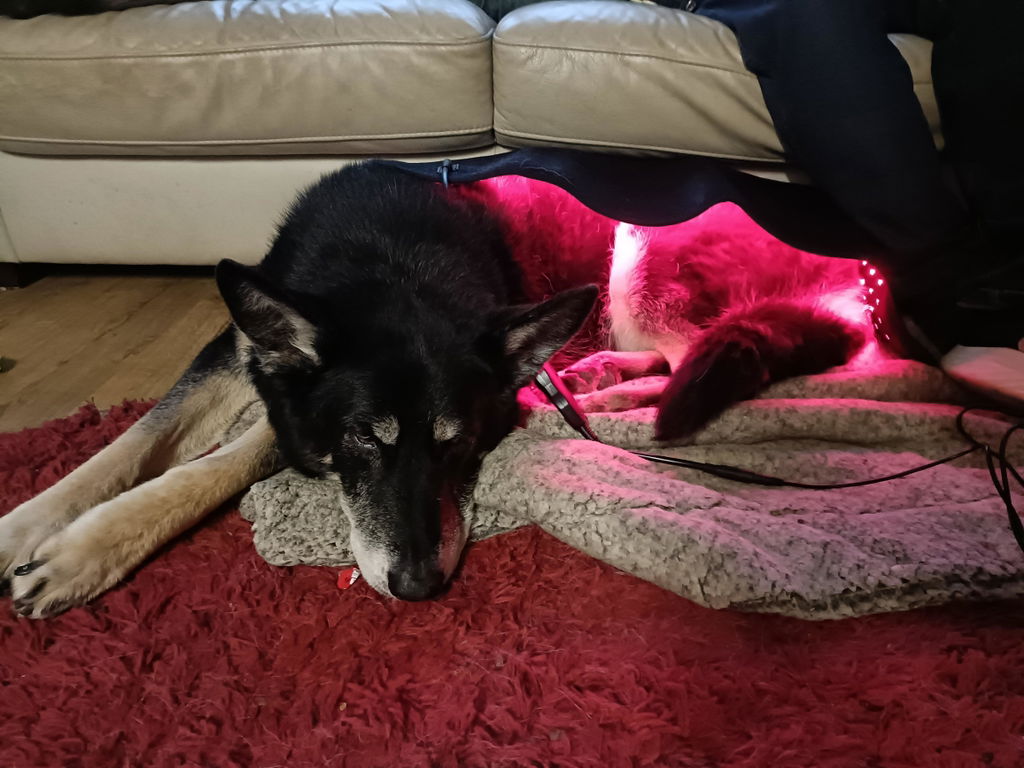
“I purchased 2 of the large pads for both my fur babies as they both have arthritis and my lady has luxating patellar's. ... My lady has taken to the pad really well and will lay and relax on it without much persuasion”
Susan Philip, Verified buyer, June 2026. About her two dogs, who both have arthritis. Large Red Light Therapy Pad

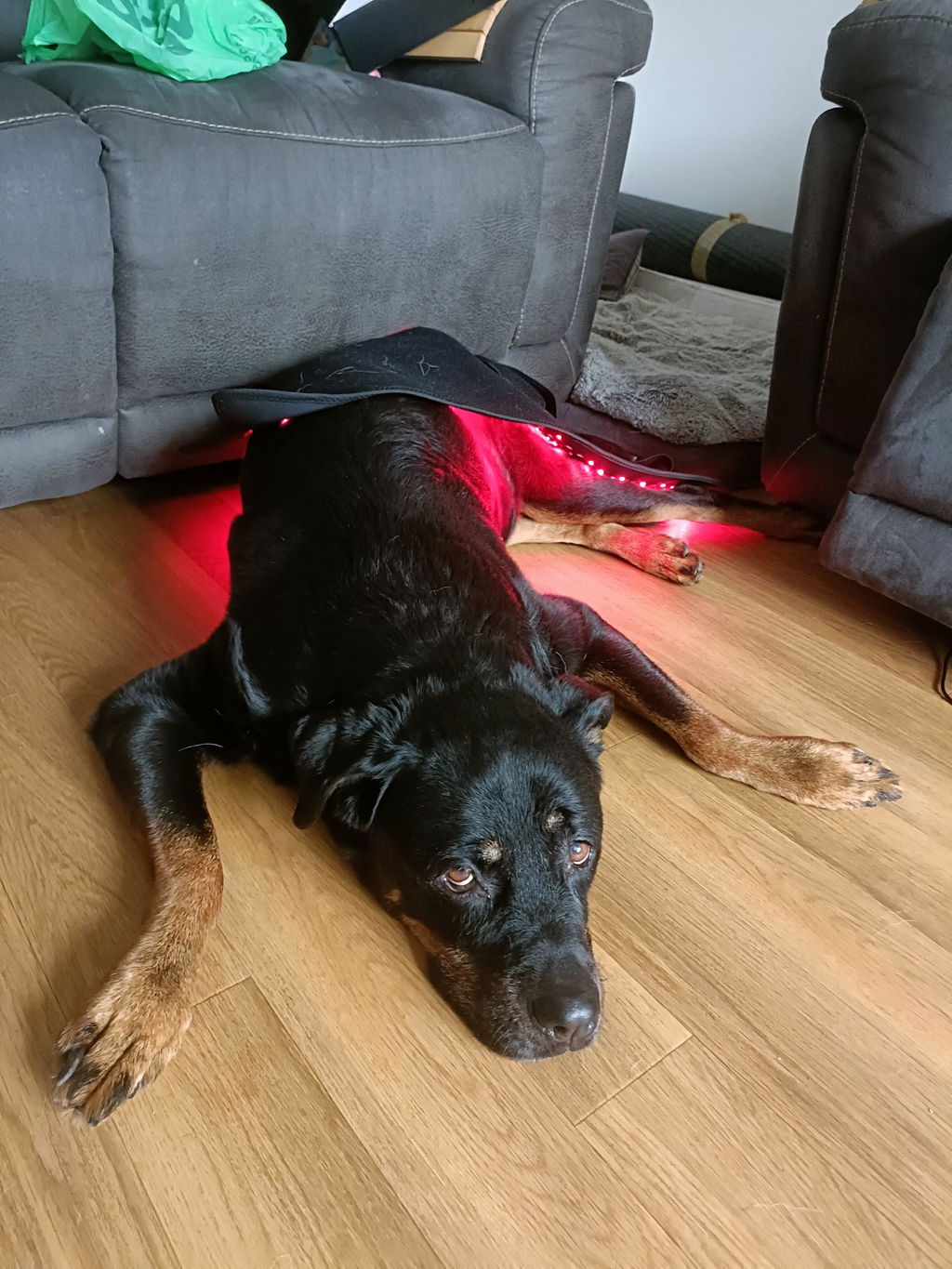
“He is currently having hydro therapy too. He settles well using the mat once he has a frozen yogurt.”
Rossi, Verified buyer, September 2026. About his Shihpoo, who has a slightly lame back leg. Large Red Light Therapy Pad
“my dog has severe arthritis in his right leg, we use the pad on P1 for 20 minutes twice daily”
Jennie Head, Verified buyer, May 2026. About her dog's routine. Small Cordless Pad
Which product suits a dog with a luxating patella?
| Product | Best for | Good to know |
|---|---|---|
| Leg Wrap | Wrapping directly around the knee | Cordless, 40 LEDs, up to 89 mW/cm², fits legs 14cm to 28cm around, 15-minute auto-off |
| Large Pad | A full-body evening routine, as Mila has | 210 LEDs, five power settings, up to 124.1 mW/cm², lie on it or wrap it around |
| Small Cordless Pad | One specific spot, strapped in place | Cordless, 60 LEDs, comes with a long and a short strap |
Not sure which suits your dog? Our fit finder walks you through it, or get in touch and tell us about your dog.
Frequently asked questions
Can a dog live a normal life with a luxating patella?
Many do. In the UK, most dogs with a diagnosis are managed day to day rather than with surgery.[1] Weight, steady exercise, a sensible home setup and regular vet checks make a big difference to how comfortable they stay.
Does a grade 4 luxating patella always need surgery?
Not always. Higher grades are more often considered for surgery,[3] but the decision depends on your individual dog, their age and how they are coping. That is one for your vet.
Is red light therapy suitable for a dog with a luxating patella?
Many owners, us included, use it as a calm, comforting part of their dog's routine. As with anything new, check with your vet first if your dog has a diagnosed condition or has recently had surgery. Our user guide covers how to use each product safely.
Can I put the Leg Wrap directly on the knee?
Yes. The Leg Wrap is designed to sit around the leg, including the knee, and fits legs from 14cm to 28cm around. Measure around the widest part of the area you want to cover before ordering.
How often should we use it?
Consistency matters more than length. We find 10 to 15 minutes, most days, works far better than occasional long sessions.
See what Mila uses every day
Our full red light range: pads and wraps for dogs of every size, with free tracked delivery and a 30-day money-back guarantee.
Keep reading
- Cruciate Ligament Injury in Dogs: Signs, Surgery and Why We Chose Another Path for Mila
- Why Are My Dog's Back Legs Weak? Causes, When to Worry and How to Help
- Arthritis in Dogs: Signs, Daily Routine and Where Red Light Fits
- Hip Dysplasia in Dogs: A UK Owner's Guide to Daily Comfort
- IVDD in Dogs: A Calm Home Routine for Dachshunds and Other Breeds
- Red Light Therapy for Dogs: A Dog Owner's Guide
Important information
This article is written by dog owners to share general information and our own experience. It is not veterinary advice. ChillyPup products are designed to be a comforting part of your dog's daily routine and are not intended to diagnose, treat or cure any condition. Always speak to your vet about your dog's health, especially if they have a diagnosed condition, are on medication or have recently had surgery.
References
- O'Neill DG, Meeson RL, Sheridan A, Church DB, Brodbelt DC. The epidemiology of patellar luxation in dogs attending primary-care veterinary practices in England. Canine Genetics and Epidemiology. 2016;3. RVC VetCompass summary
- Davies Veterinary Specialists. Patellar luxation fact sheet. vetspecialists.co.uk
- Animal Trust. Patella luxation in dogs. animaltrust.org.uk