

Hip Dysplasia in Dogs: A UK Owner's Guide to Daily Comfort

In short
- Hip dysplasia is an inherited condition where the hip joint develops abnormally, so the ball and socket do not fit snugly.
- It shows up in puppies and young dogs, and the wear it causes usually leads to arthritis in the hips later in life.
- Larger breeds such as Labradors, Golden Retrievers, German Shepherds and Rottweilers are most often affected, but any dog can be.
- Bunny hopping, a swaying back end and stiffness getting up are the classic signs. Your vet confirms it with an exam and X-rays.
- Below: the signs, how it is managed in the UK, practical home tips and how owners fit red light into their dog's daily routine.
If your vet has mentioned hip dysplasia, you are far from alone. It is common in some of the UK's best-loved breeds and it stays with a dog for life, but most dogs with it go on to live full, happy lives with the right plan from their vet and a sensible routine at home.
We are dog owners, not vets, so anything about diagnosis or treatment is a conversation for your vet. What we can share is what we have learned from our own dog and from the many owners who talk to us about their dogs' hips.
Shop the red light rangeFind the right fit
What is hip dysplasia?
The hip is a ball and socket joint. In hip dysplasia, one or both hips develop abnormally, so the ball at the top of the thigh bone does not sit snugly in the socket. The abnormality is present from a young age and can worsen as a puppy becomes more active, causing wear that can be painful and affect a dog's health and behaviour.[1] Over time, that wear usually leads to osteoarthritis in the hip.
The British Veterinary Association describes hip dysplasia as inherited but "multifactorial", meaning genes are not the whole story. Even dogs with well-scored parents can be affected.[1]
Which dogs are most at risk?
Hip dysplasia is most often seen in medium and large breeds. A large UK study of over 455,000 dogs found higher odds of joint arthritis in breeds such as Rottweilers, Labrador and Golden Retrievers and German Shepherds, and in dogs at or above the average weight for their breed.[2] That is why the BVA and Kennel Club run a hip scoring scheme for breeding dogs, set up in 1965. Each dog is X-rayed from one year old and given a score from 0 to 106, where lower is better.[1] If you are buying a puppy from a breed known for hip problems, ask to see both parents' hip scores.
Signs to look out for
- "Bunny hopping": moving both back legs together when running
- A swaying or waddling back end
- Stiffness or difficulty getting up, especially after a rest or first thing in the morning
- Reluctance to climb stairs, jump into the car or onto the sofa
- Sitting with the back legs out to one side
- Shorter walks, or wanting to turn for home earlier than usual
- Less muscle on the back legs over time
Book a vet appointment if you notice:
- Any of the signs above in a puppy or young dog
- A sudden limp, or your dog will not put weight on a back leg
- Stiffness that is getting noticeably worse
How it is usually managed
Your vet will examine your dog and usually take X-rays. Management depends on age and severity. For many dogs it is a combination of weight control, the right exercise, physiotherapy or hydrotherapy, joint support and medication where needed. Some dogs are referred for surgery, from procedures in young dogs to hip replacement in more severe cases. Every dog is different, so the plan is always yours and your vet's to make together.
Living with it at home
- Keep them lean. Extra weight puts extra load through the hips. In the UK study above, heavier dogs had more than twice the odds of joint arthritis.[2]
- Regular, steady exercise. Daily walks keep the muscles around the hips strong. Avoid lots of ball chasing, sudden turns and jumping.
- Hydrotherapy. Swimming builds muscle without impact, and many UK hydrotherapy centres work alongside vets.
- Grip underfoot. Rugs and runners on wooden and tiled floors stop the back legs sliding out.
- Ramps and steps for the car and furniture.
- A thick, supportive bed in a warm, draught-free spot. Cold, hard floors tend to make stiffness worse.
Where red light fits in
Red light therapy has been studied in dogs with hip arthritis in veterinary clinics. In a 2022 controlled trial of 20 dogs with osteoarthritis in both hips, the group given a three-week course of clinical laser therapy scored better on several pain and mobility measures over the following month than the group given a three-week course of a standard anti-inflammatory.[3] That study used a clinical laser in a vet setting, not a home device, so we would never claim the same results. What it does show is why so many vets now offer light therapy, and why owners are interested in a routine they can keep up at home.
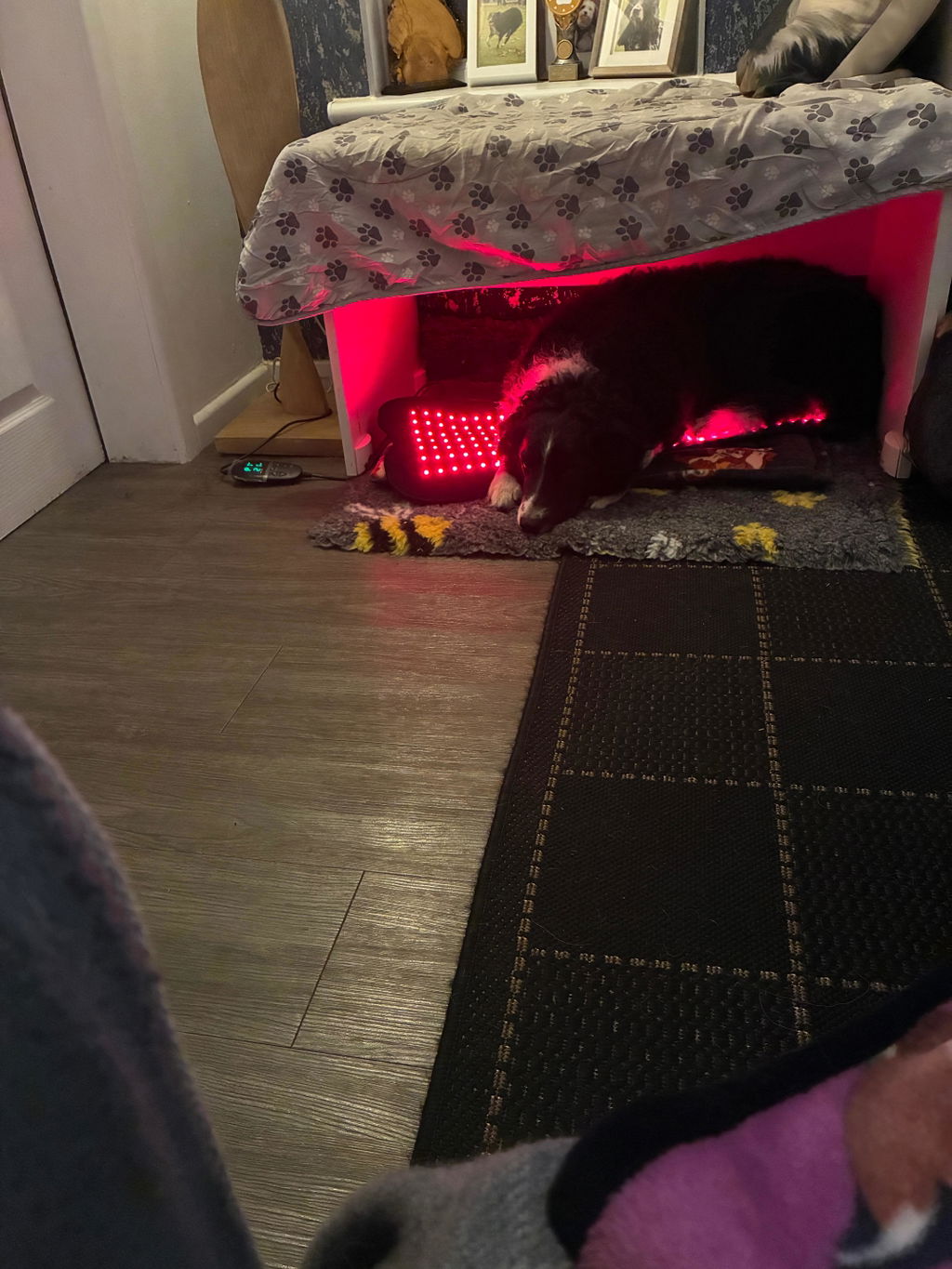
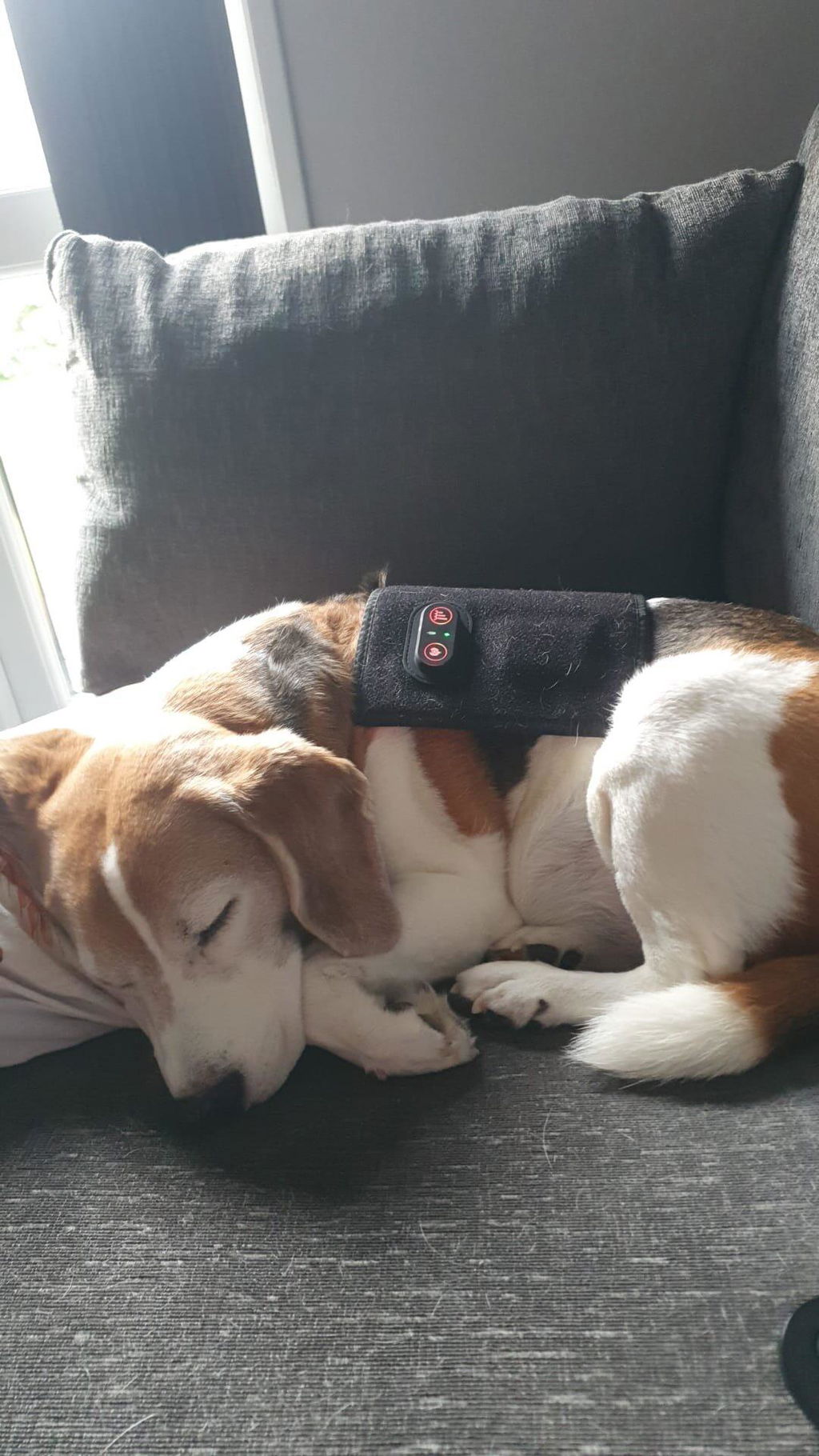
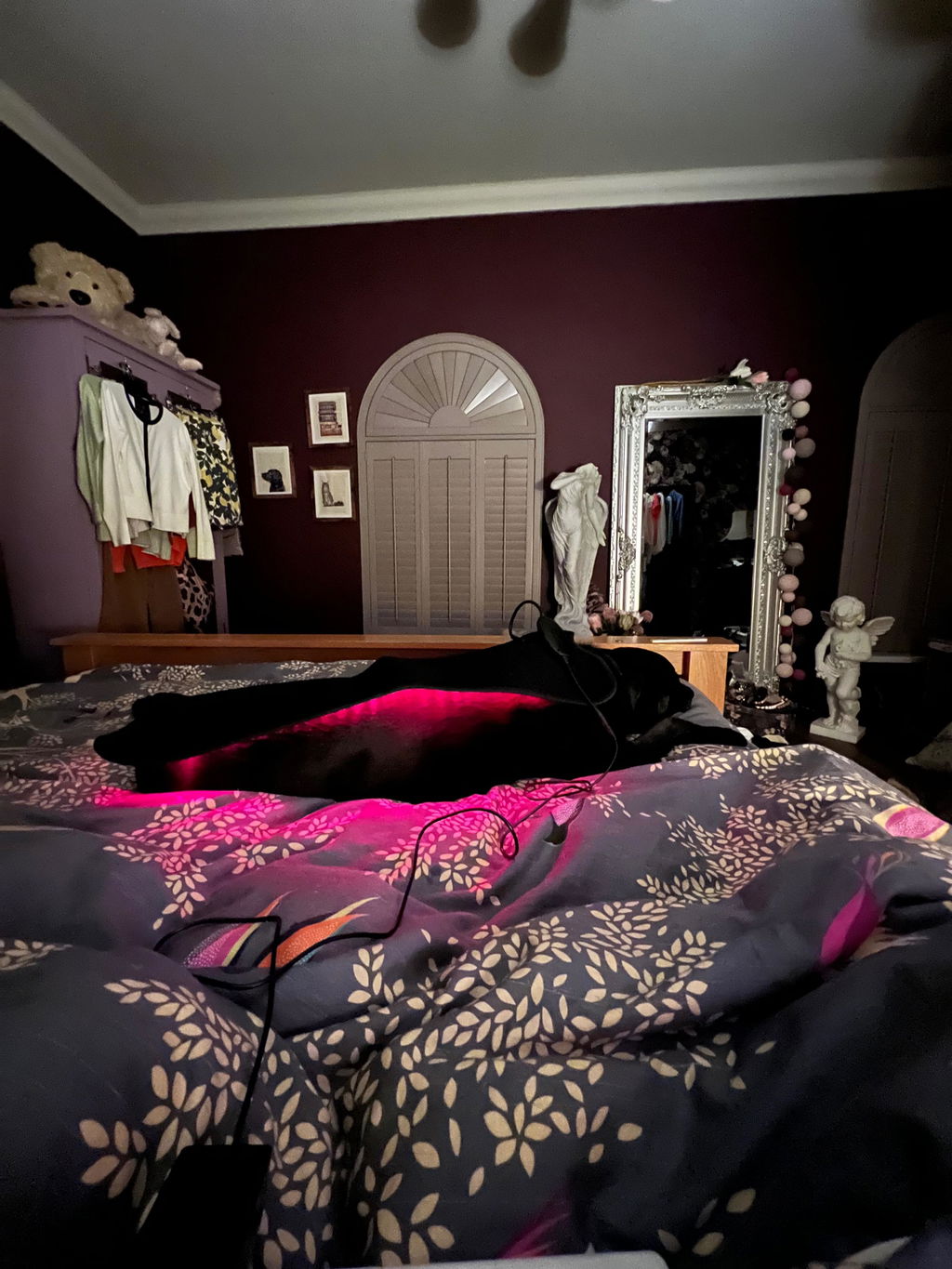
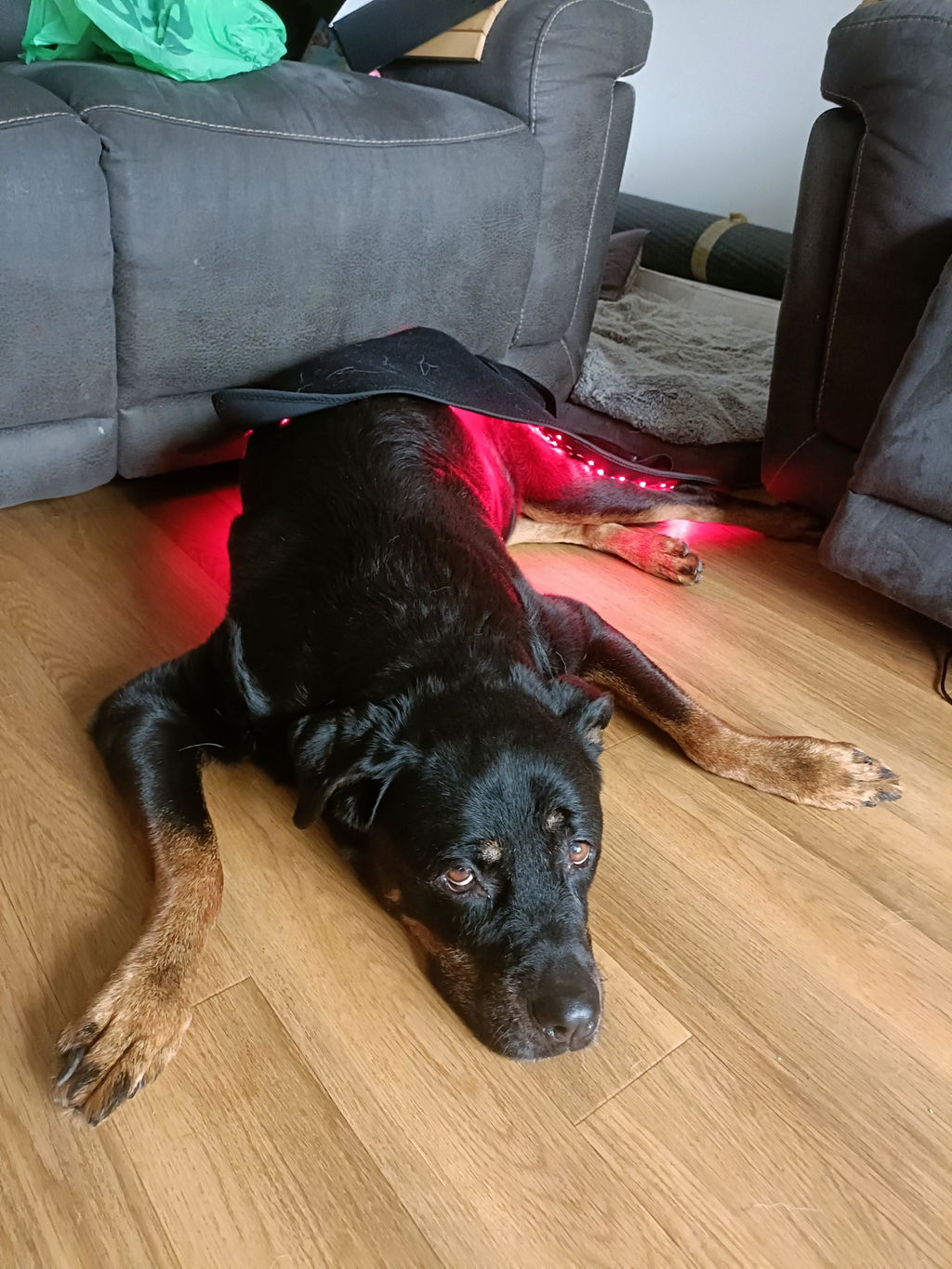
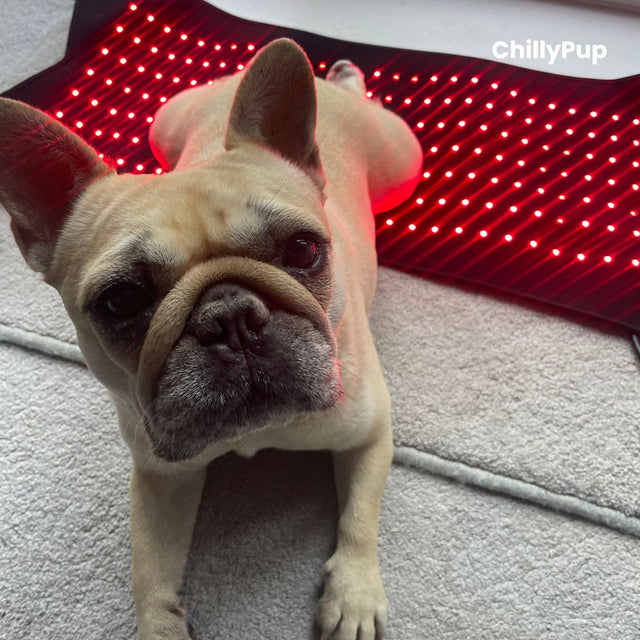
At home, red light works best as a calm, regular part of the day. With our own dog Mila, who has arthritis and a cruciate injury in her left back leg, it is part of every evening: her Large Pad wrapped around her on the sofa while we watch TV, 15 to 20 minutes, and she sleeps through it. For hips, the Large Pad is the one most owners choose because it covers both hips and the lower back in one go, and larger dogs can simply lie on it.

A few things owners tell us help:
- Pick a settled moment. After an evening walk, or when the house goes quiet. A relaxed dog settles quickly.
- Drape it over while they sleep. Some owners first introduce the pad by gently placing it over their dog mid-nap.
- Start low. A lower power setting for the first week, then use higher settings on stiffer days.
- Consistency over length. 10 to 20 minutes, most days, built up over weeks and months.
What other owners tell us
These are real reviews left by ChillyPup customers, quoted word for word with the photos they added. Every dog is different, and you can read all of our reviews on our reviews page.
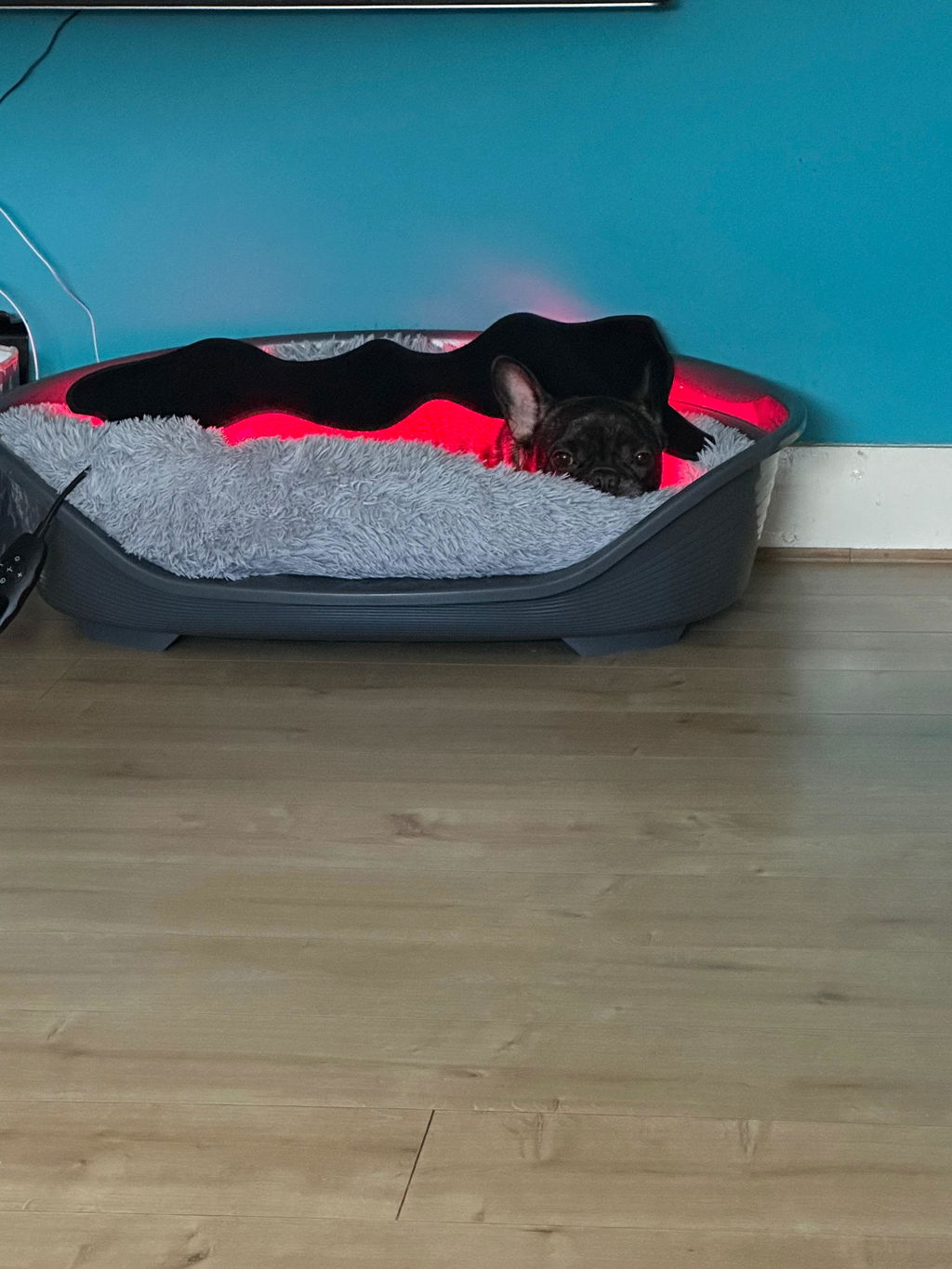
“I was so sure it wouldn't work and now I have both the large and small mats. ... 20 mins either side of his hips and he's so much happier.”
Emma and Bruce, Verified buyer, May 2026. About their young pup with hip dysplasia. Small Cordless Pad
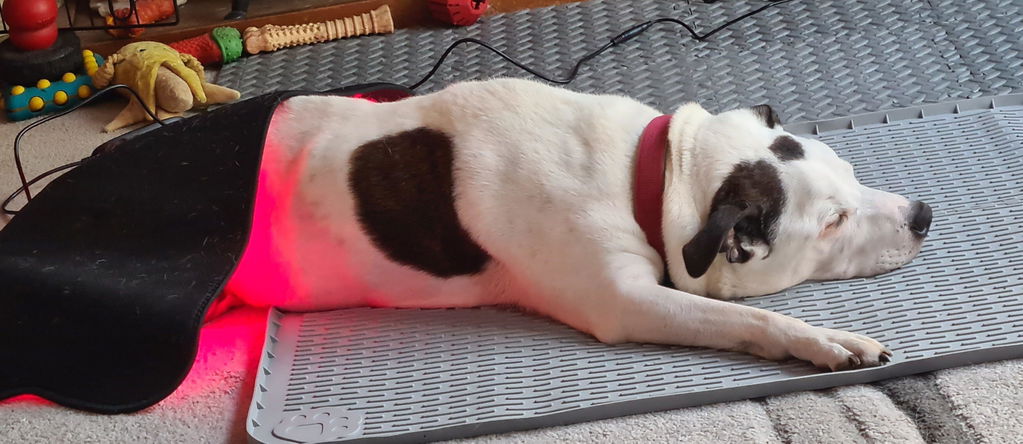
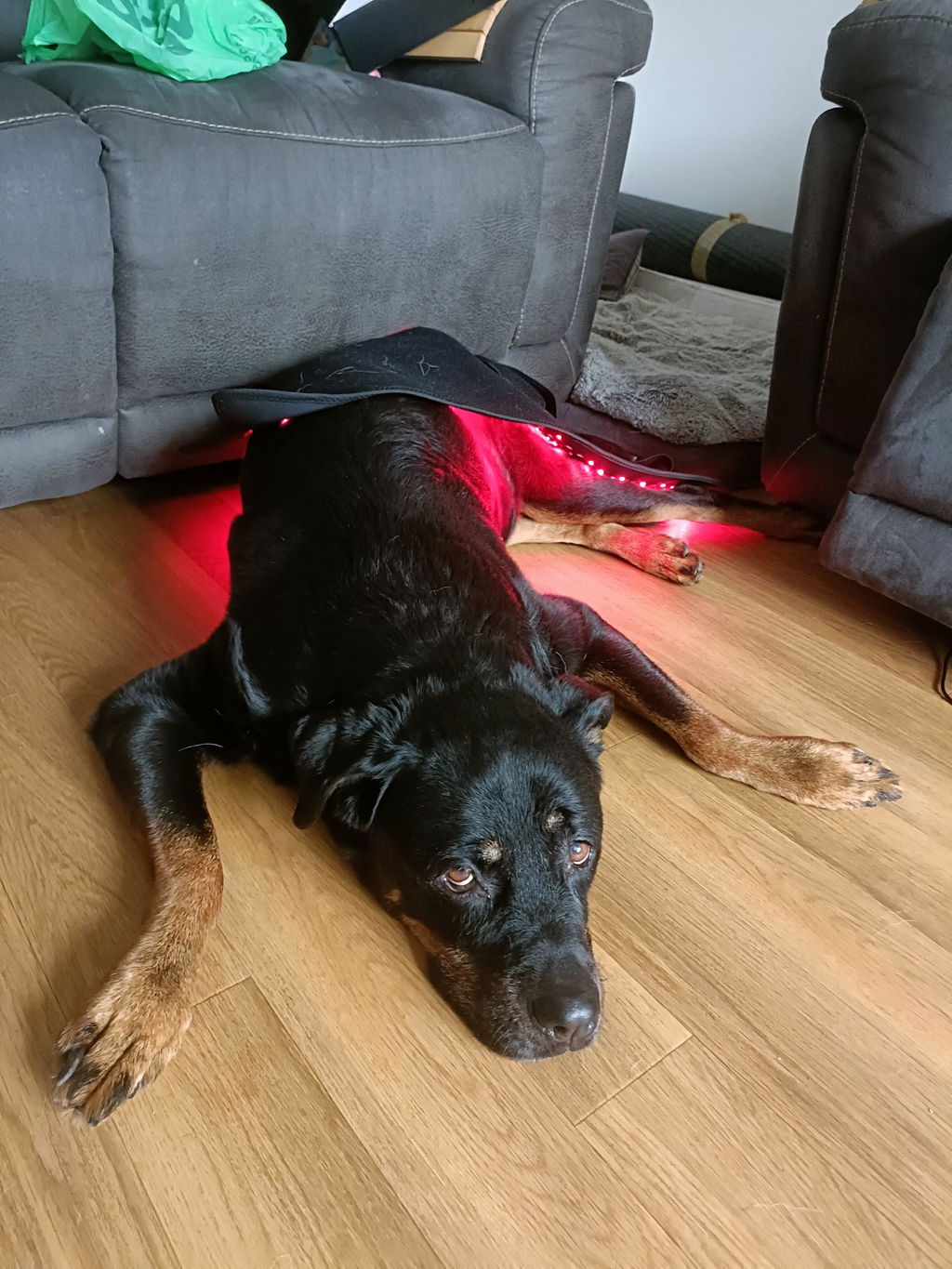
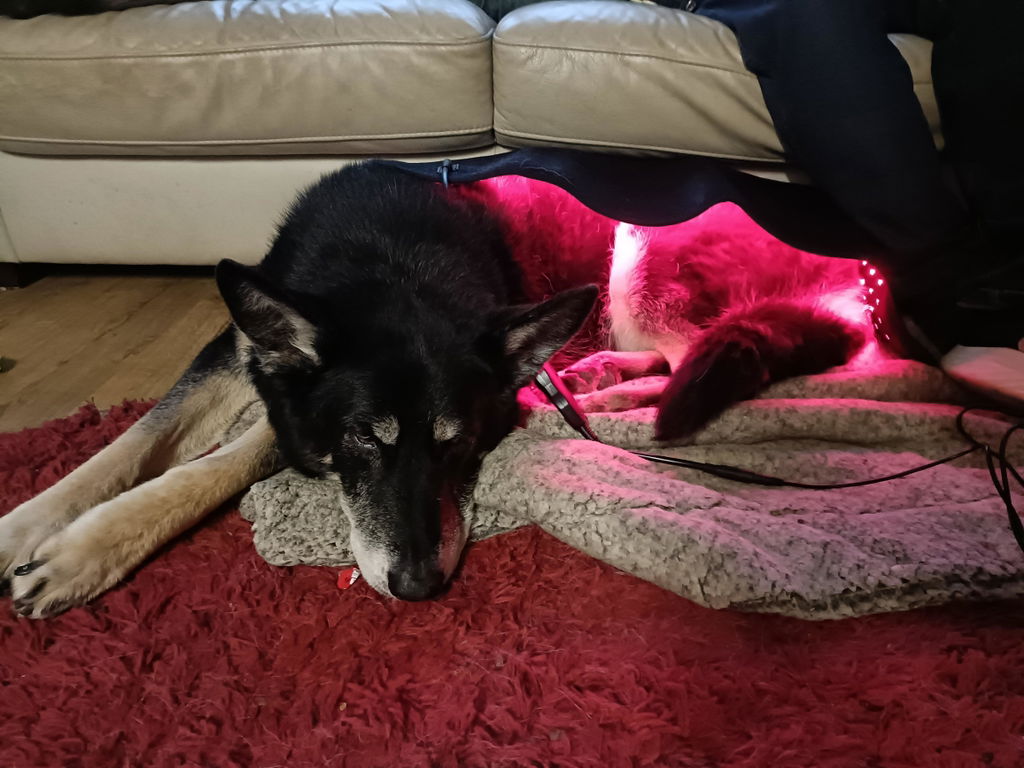
“hoping will help Alfie , our 15 year old staffy's rear legs/hips. Managed eventually to gently place it over his back while sleeping and he seemed fine with it, long may it continue.”
Bruce, Customer review, September 2026. About Alfie, his 15-year-old Staffy. Large Red Light Therapy Pad

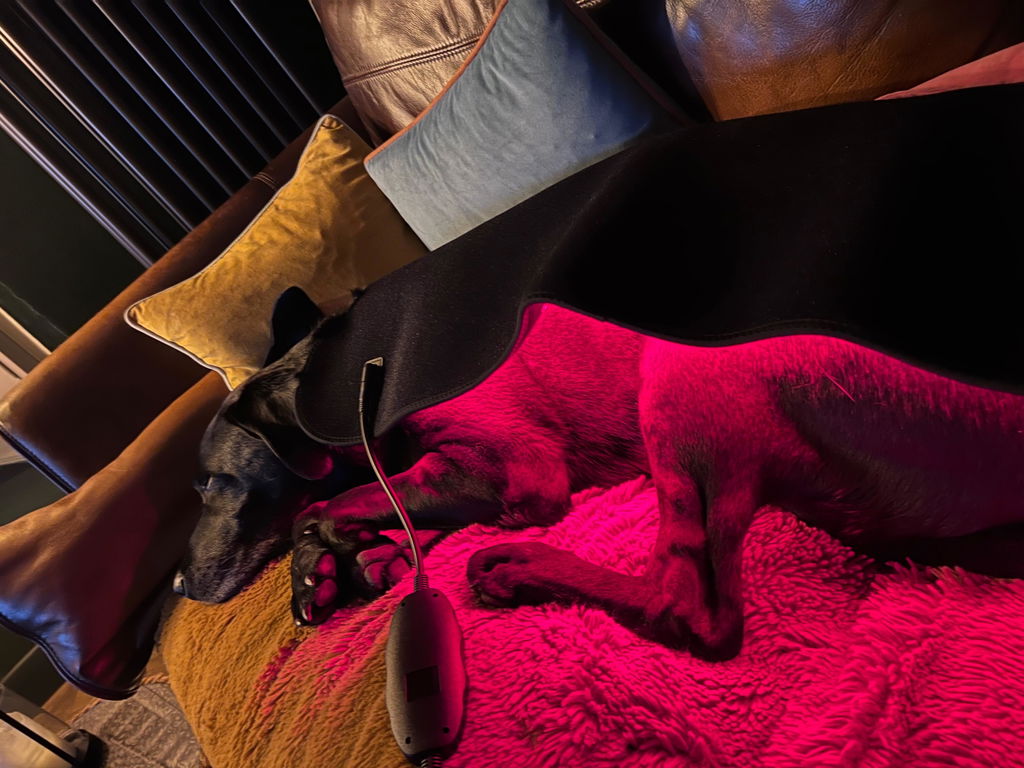
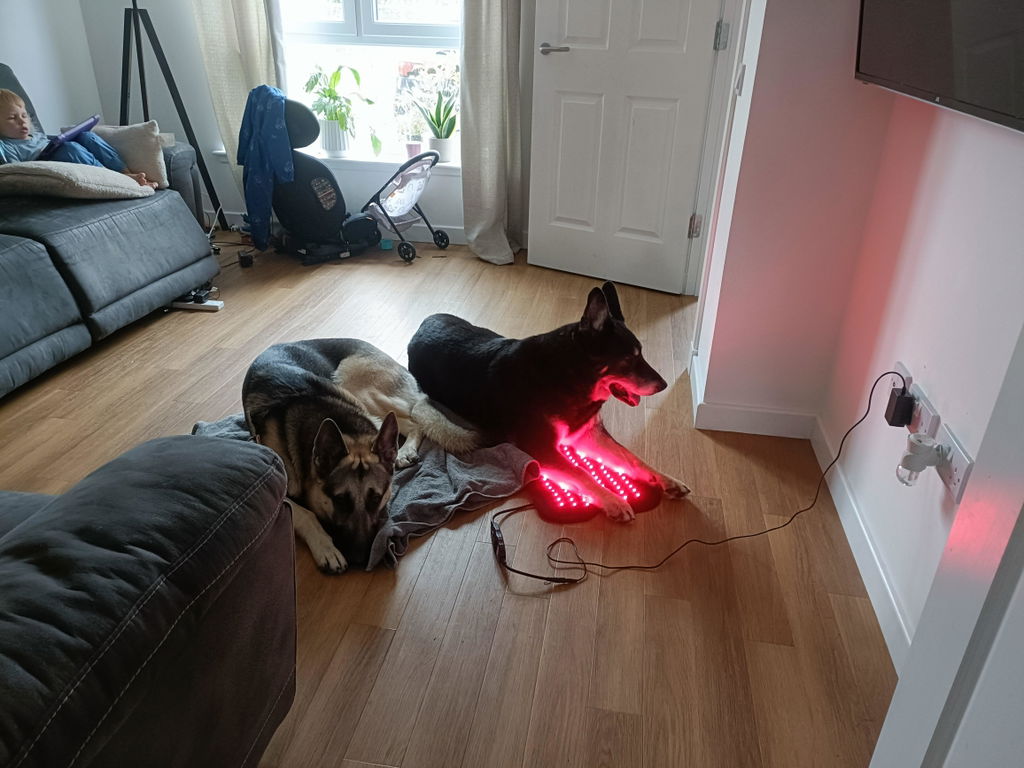
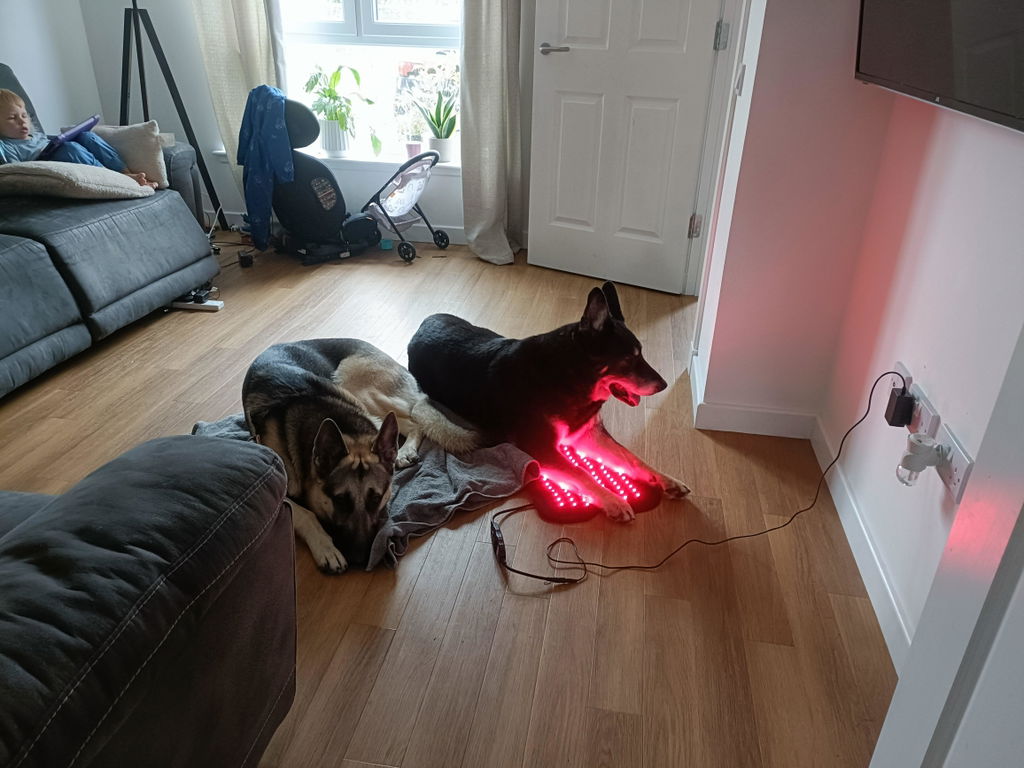
“I bought one of the large red light mats for my German Sheppard, Luna. We've managed to convince her to sit on it after some persuasion!”
Jade & Luna, Verified buyer, July 2026. About Luna, her German Shepherd. Large Red Light Therapy Pad
Which product suits a dog with hip dysplasia?
| Product | Best for | Good to know |
|---|---|---|
| Large Pad | Both hips and the lower back at once; larger dogs can lie on it | 68cm x 33cm, 210 LEDs, five power settings, up to 124.1 mW/cm² |
| Medium Cordless Pad | Strapping over the hips of a small or medium dog, or one hip of a larger dog | Cordless, 60 LEDs, up to 89 mW/cm², 20-minute auto-off |
| Leg Wrap | The back leg itself, for dogs whose knees or legs also feel it | Cordless, fits legs 14cm to 28cm around |
Not sure which suits your dog? Try our fit finder, or get in touch and tell us about your dog.
Frequently asked questions
At what age does hip dysplasia show?
The changes are present from a young age, and signs can appear in puppies and young dogs. Others show little until arthritis develops later in life.[1] If you are worried about a puppy, speak to your vet early.
Can a dog with hip dysplasia live a normal life?
Many do. A healthy weight, the right exercise and a plan from your vet make a big difference to how comfortable they stay.
Is red light therapy suitable for dogs with hip dysplasia?
Many owners use it as a comforting part of their dog's evening routine. Check with your vet first if your dog has a diagnosed condition, is on medication or has recently had surgery.
Is red light therapy at home the same as laser therapy at the vet?
No. Clinic lasers are used by trained staff, usually as a short course. Home devices like ours are designed for regular, everyday use. Plenty of owners use both, with their vet's guidance.
How long does each session take?
Most owners use 10 to 20 minutes a day. Doing it consistently matters far more than doing it for longer.
See what Mila uses every day
Our full red light range: pads and wraps for dogs of every size, with free tracked delivery and a 30-day money-back guarantee.
Keep reading
- Cruciate Ligament Injury in Dogs: Signs, Surgery and Why We Chose Another Path for Mila
- Why Are My Dog's Back Legs Weak? Causes, When to Worry and How to Help
- Arthritis in Dogs: Signs, Daily Routine and Where Red Light Fits
- Luxating Patella in Dogs: Grades, Signs and Living with Mila's Grade 4 Luxation
- IVDD in Dogs: A Calm Home Routine for Dachshunds and Other Breeds
- Red Light Therapy for Dogs: A Dog Owner's Guide
Important information
This article is written by dog owners to share general information and our own experience. It is not veterinary advice. ChillyPup products are designed to be a comforting part of your dog's daily routine and are not intended to diagnose, treat or cure any condition. Research mentioned here used clinical equipment in veterinary settings, not ChillyPup products. Always speak to your vet about your dog's health, especially if they have a diagnosed condition, are on medication or have recently had surgery.
References
- British Veterinary Association. Hip Dysplasia Scheme for dogs. bva.co.uk
- Anderson KL, O'Neill DG, Brodbelt DC, et al. Prevalence, duration and risk factors for appendicular osteoarthritis in a UK dog population under primary veterinary care. Scientific Reports. 2018;8:5641. doi.org/10.1038/s41598-018-23940-z
- Alves JC, Santos A, Jorge P, Carreira LM. A randomized double-blinded controlled trial on the effects of photobiomodulation therapy in dogs with osteoarthritis. American Journal of Veterinary Research. 2022. doi.org/10.2460/ajvr.22.03.0036