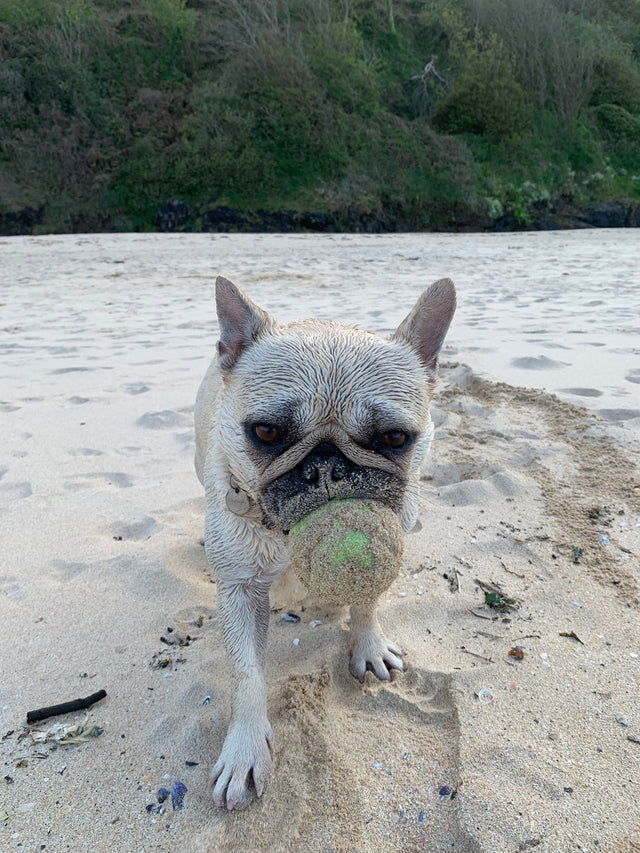
Cruciate Ligament Injury in Dogs: Signs, Surgery and Why We Chose Another Path for Mila

In short
- The cruciate ligament holds the knee stable. When it tears or snaps, the knee wobbles and dogs often hold the back leg up or toe-touch.
- Around 1 in 180 dogs seen by UK vets has a diagnosed cruciate problem, and about two-thirds of them have surgery.
- Surgery is the usual recommendation, but smaller dogs have often done well without it. The right choice depends on the individual dog.
- Our Frenchie Mila snapped the cruciate ligament in her left back leg. Because of how her legs are built, we chose not to operate. This is why, and how we manage it now.
- Whatever you decide with your vet, a calm, consistent routine at home matters for the rest of your dog's life.
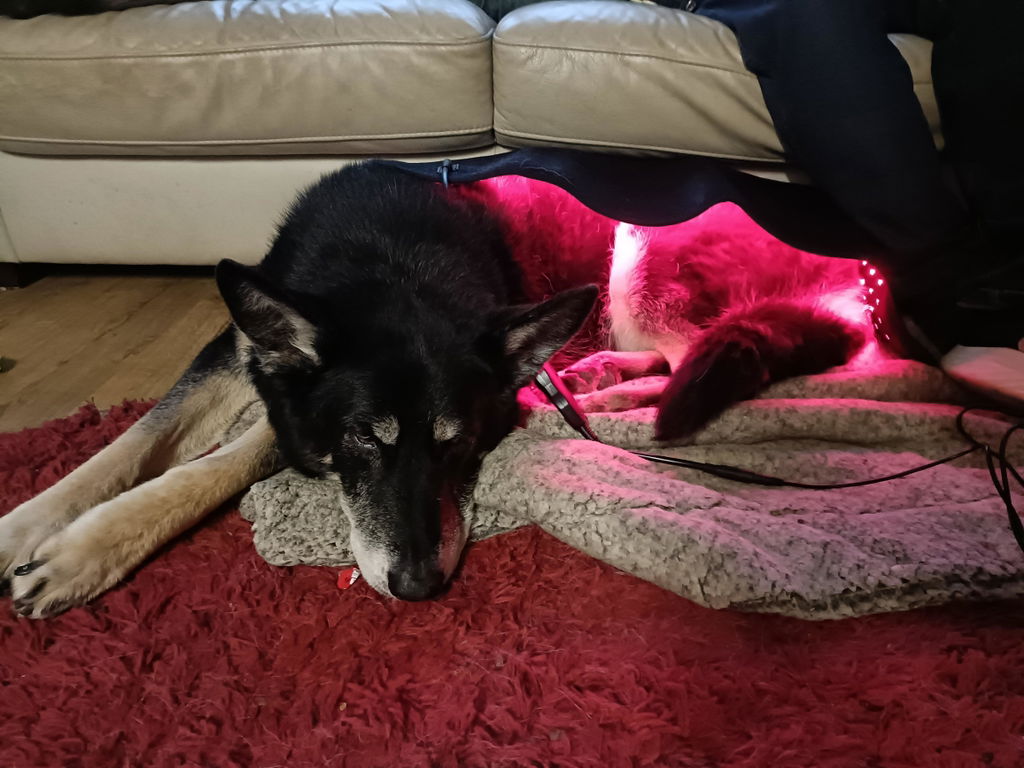
Mila is our 8-year-old French Bulldog. She has a grade 4 luxating patella, arthritis, and a snapped cruciate ligament in her left back leg. If you have just been told your dog has done their cruciate, we know exactly how that conversation with the vet feels, and how big the decision about surgery is.
This guide covers what the injury is, the signs, the usual options, and our own honest story of why we went a different way for Mila. We are dog owners, not vets. Our decision was right for Mila, but every dog is different, so please talk your own options through with your vet.
Shop the red light rangeFind the right fit
What is the cruciate ligament?
The cranial cruciate ligament (the dog version of the ACL in people) runs through the middle of the knee and stops the shin bone sliding forward under the thigh bone. In dogs it usually weakens gradually over time and then tears, sometimes partly, sometimes completely, often during something as ordinary as a jump or a sharp turn. Once it goes, the knee is unstable, which is painful and leads to arthritis in that joint over time.
How common is it, and which dogs get it?
A UK study of over 171,000 dogs found that 0.56%, about 1 in 180, had a diagnosed cruciate problem.[1] Rottweilers, West Highland White Terriers, Golden Retrievers, Yorkshire Terriers and Staffordshire Bull Terriers were among the breeds most at risk. Heavier dogs within a breed, dogs over 3 and neutered females were also more likely to be diagnosed.[1]
It often goes hand in hand with a luxating patella in smaller dogs. In one study of 233 small breed dogs with a luxating patella, around 1 in 5 also had a ruptured cruciate ligament, and those dogs tended to be older and heavier.[2] That is very much Mila's story.
Signs to look out for
- Suddenly holding a back leg up, or only touching the toe to the ground
- Limping that eases with rest and comes back after exercise
- Sitting with one back leg kicked out to the side
- Stiffness getting up, or reluctance to jump into the car or onto the sofa
- Swelling on the inside of the knee over time
Book a vet appointment if you notice:
- Your dog suddenly will not put weight on a back leg
- A limp that has not settled after a couple of days of rest
- A knee that looks swollen or your dog crying out when it moves
The usual options
Your vet will examine the knee, often under sedation, and usually take X-rays. In the UK, around two-thirds of dogs with a cruciate diagnosis have surgery.[1] Vets generally see surgery as the best route back to full function, especially for larger, active dogs, and there are several techniques depending on the dog's size and the shape of the knee.[3]
Non-surgical (conservative) management is a strict period of rest, pain relief and then a gradual return to exercise, usually with physiotherapy or hydrotherapy. Size makes a real difference. In older studies, around 86% of dogs under 15kg were improved or back to normal after conservative care, compared with around 19% of dogs over 15kg.[3] Those studies are old and did not use detailed gait analysis, so they are a guide, not a promise, but they are why vets will often discuss both options for smaller dogs.
Why we chose not to operate on Mila
This was not an easy decision, and it is not one we would ever tell another owner to copy. But it was the right one for Mila, and we want to be open about it.
Mila's back legs have never been straight. With her grade 4 luxating patella, her left back leg has always been out of alignment. Surgery would aim to straighten and stabilise that knee. For Mila, we felt that making one leg straight would push more pressure onto her spine and her right back leg, and we were worried that the other leg would then give way and need the same surgery. Putting her through an operation, a long recovery, and quite possibly a second operation on the other side did not feel fair to her.
So instead, we manage it. We know that means managing it for the rest of her life, and we know it may get worse over time. We are realistic about that. What we can do is keep her as comfortable and as settled as possible every single day, and that is where red light therapy came into her routine. Hydrotherapy is the next thing we are looking into for her.

Mila's routine now
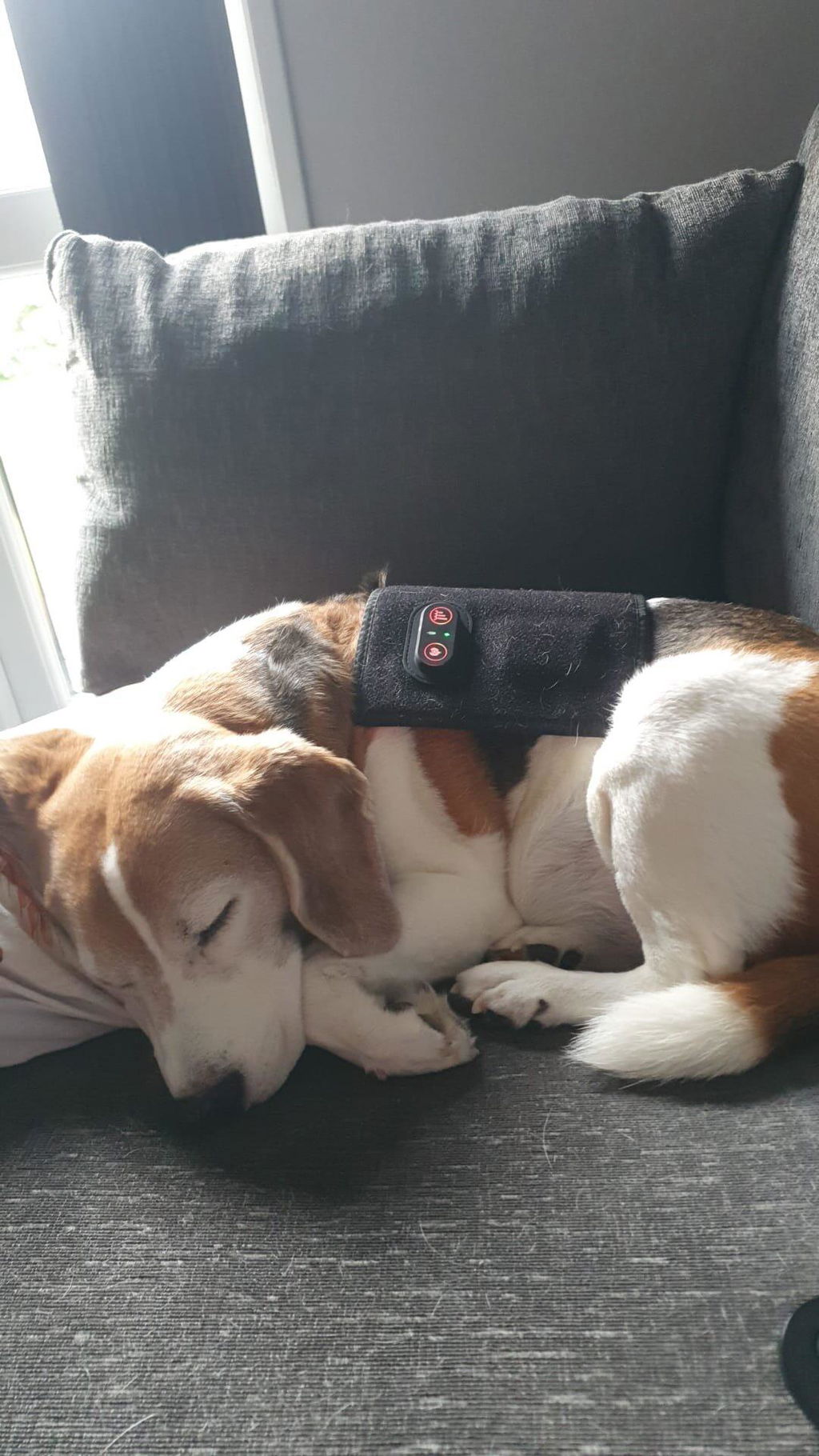
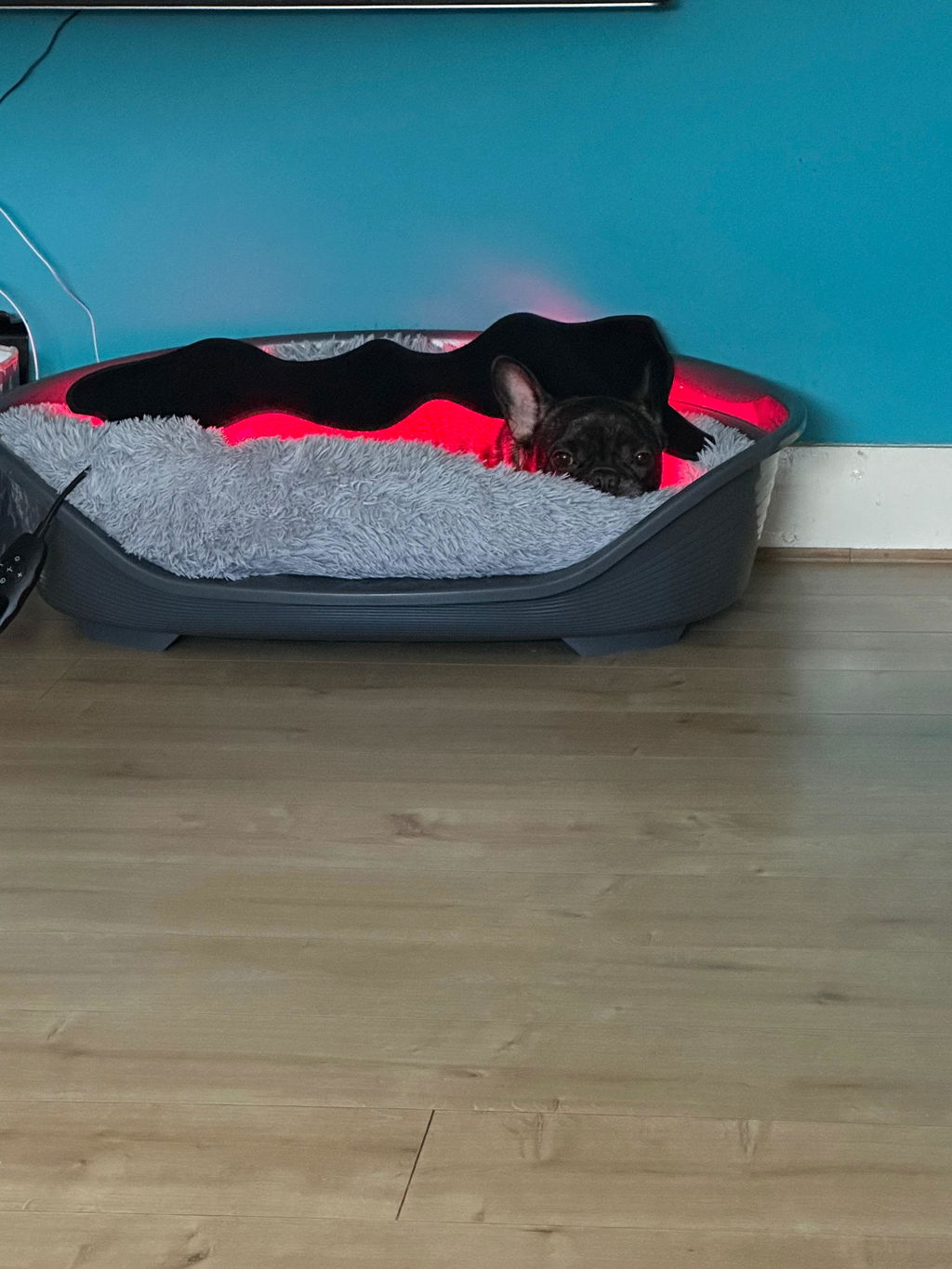
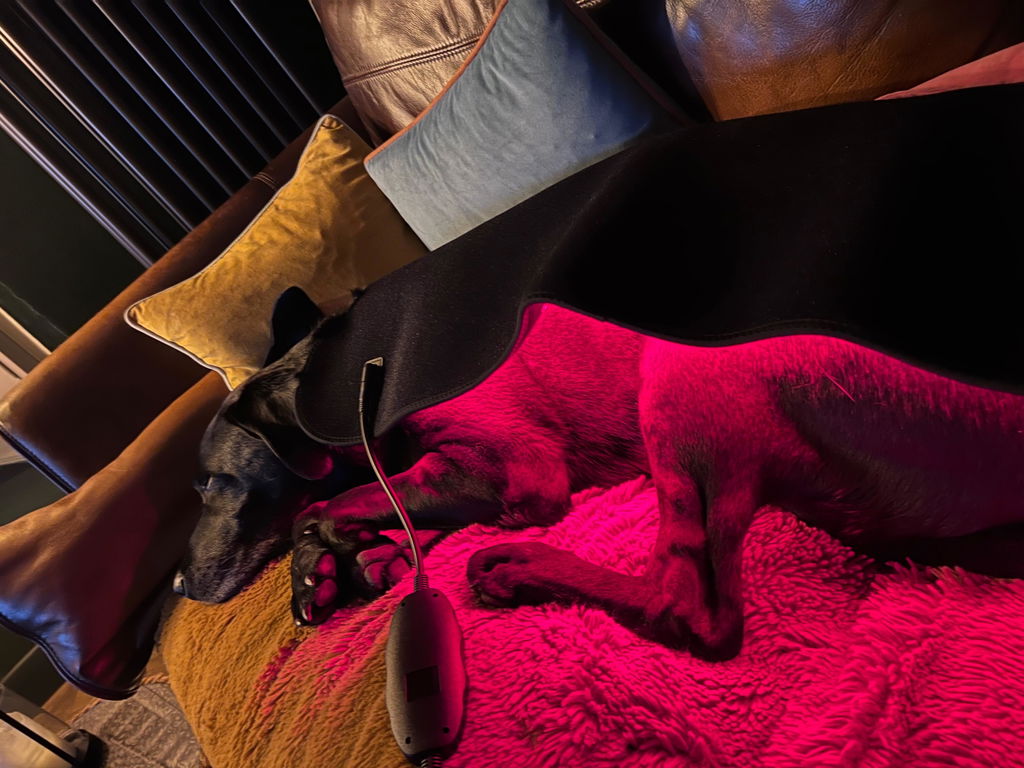
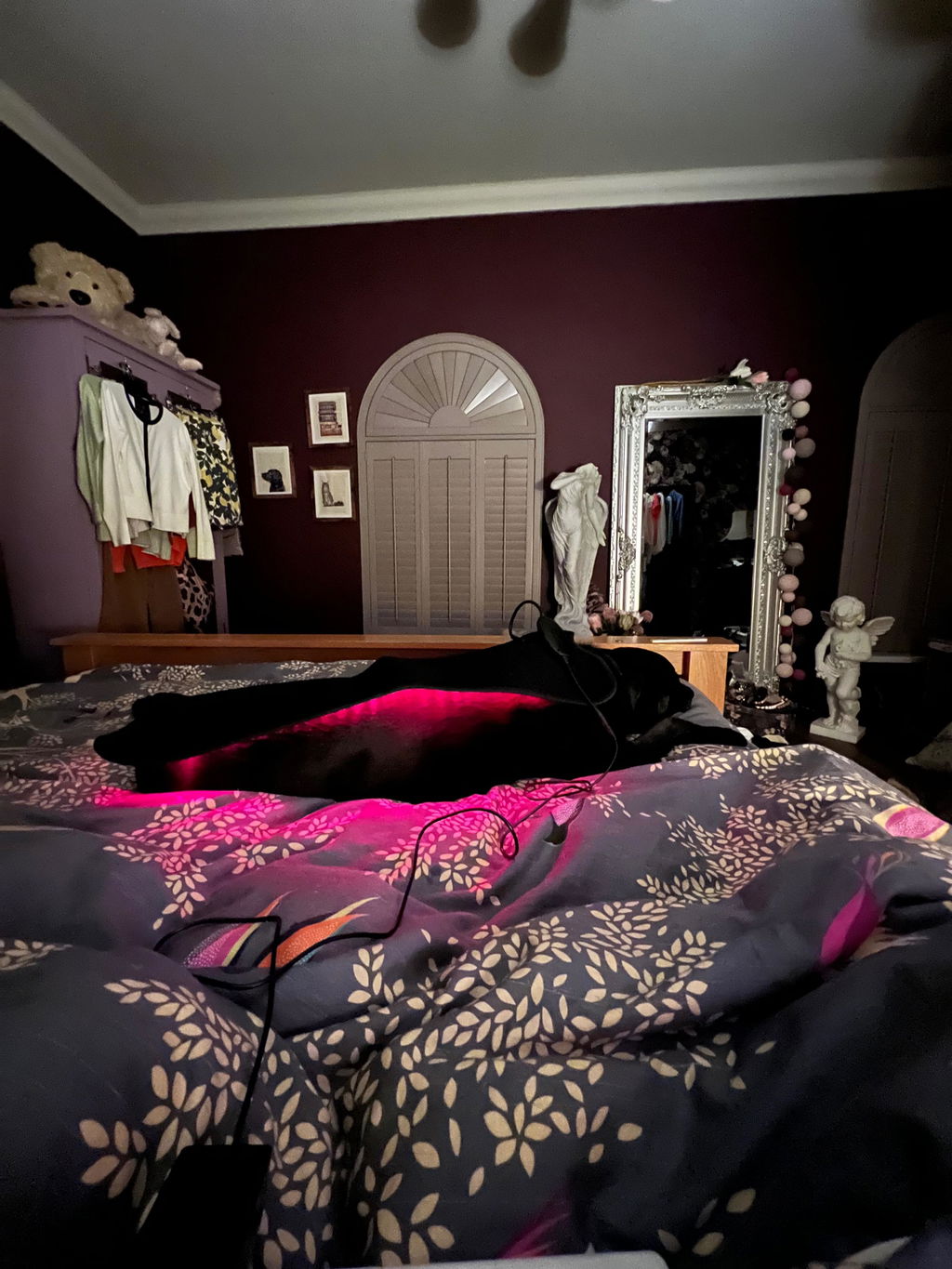
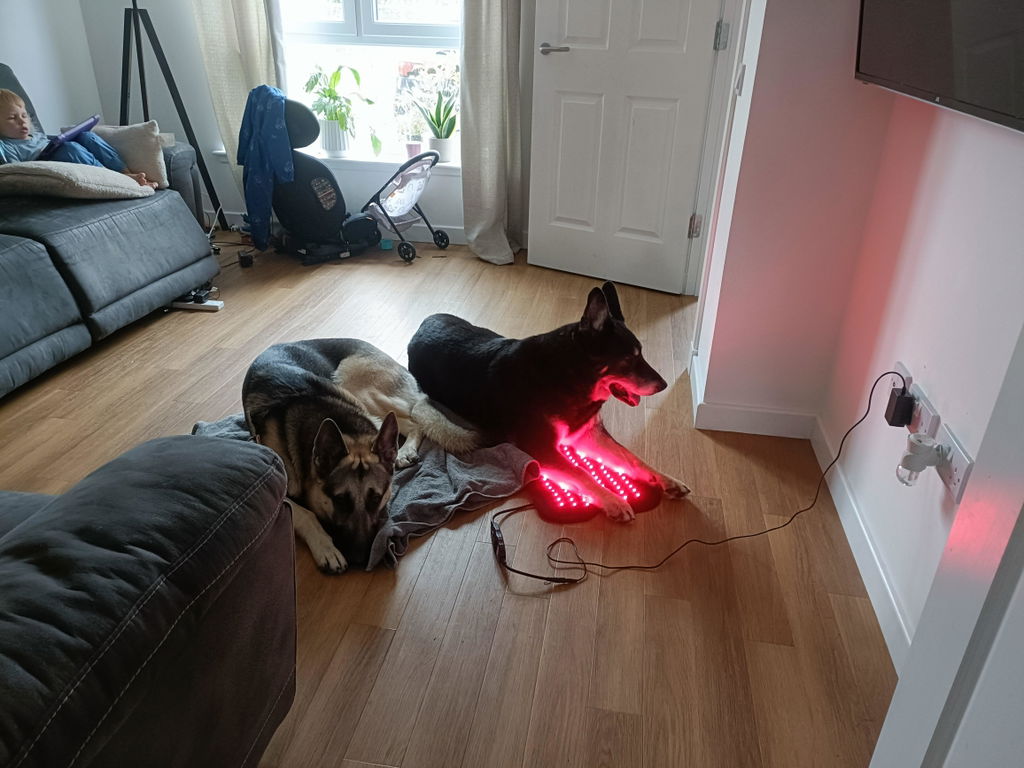
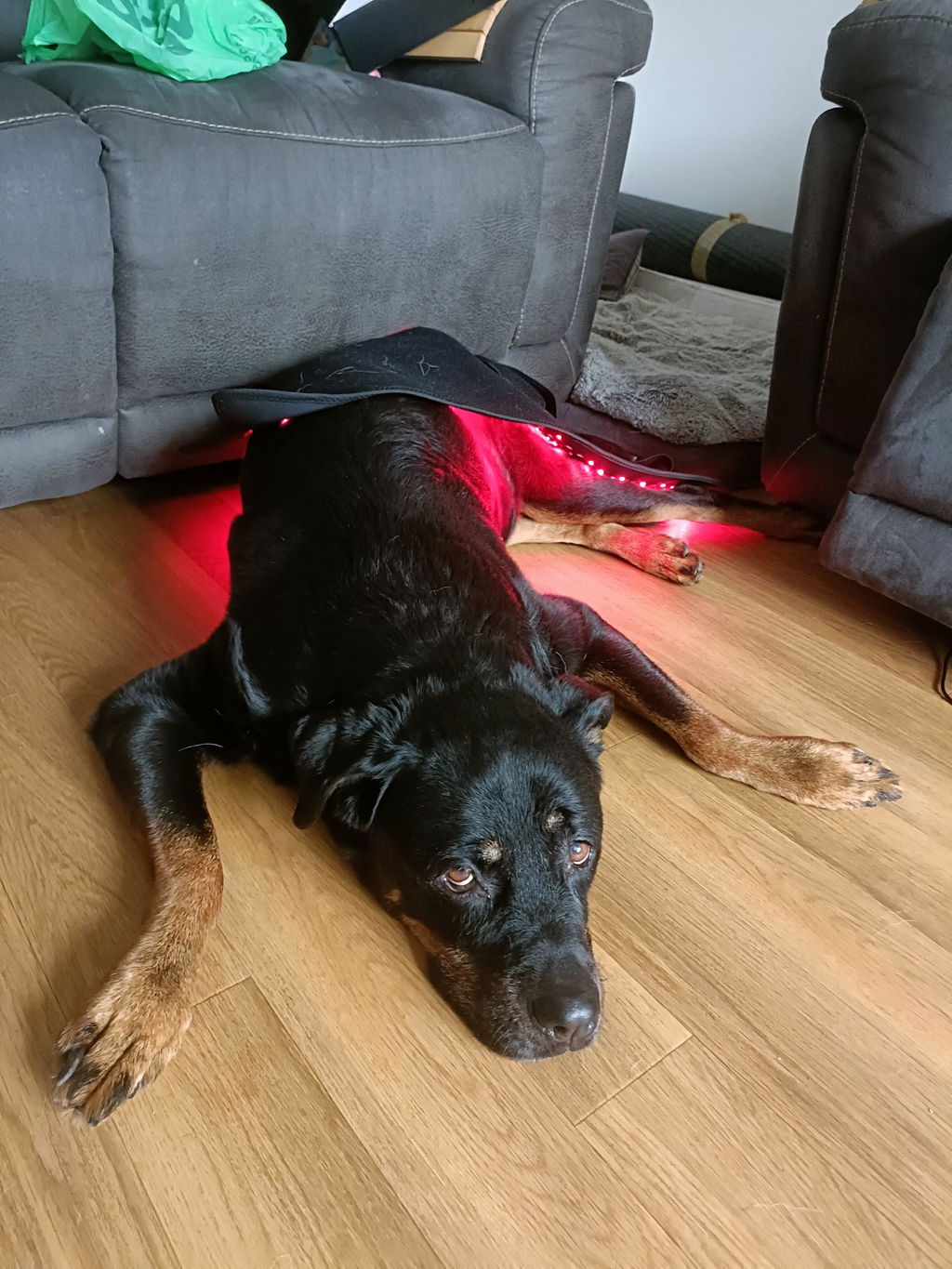
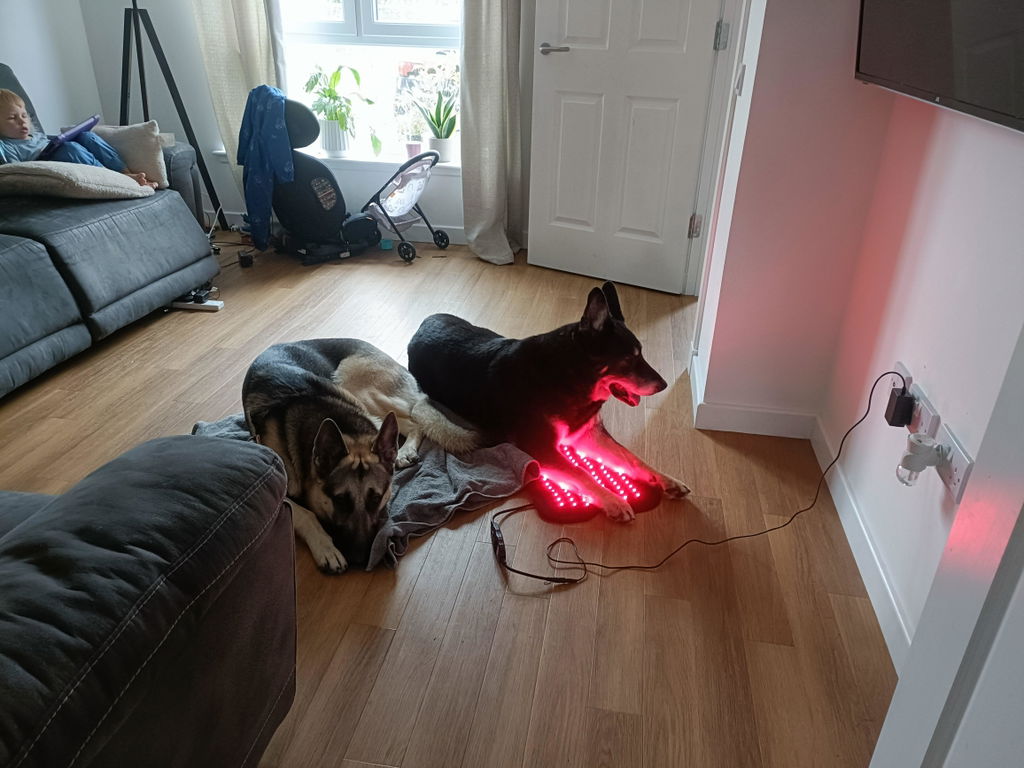
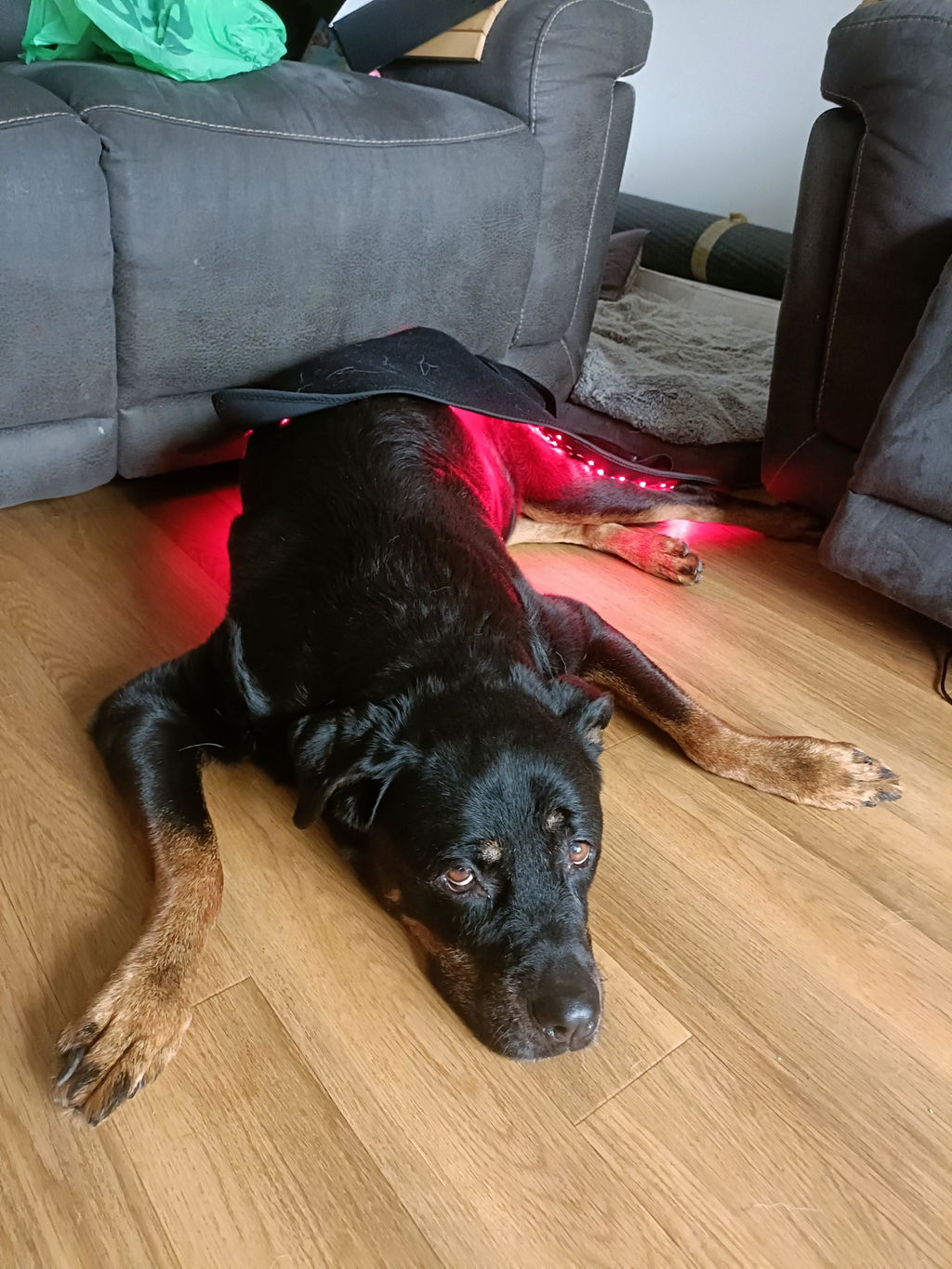
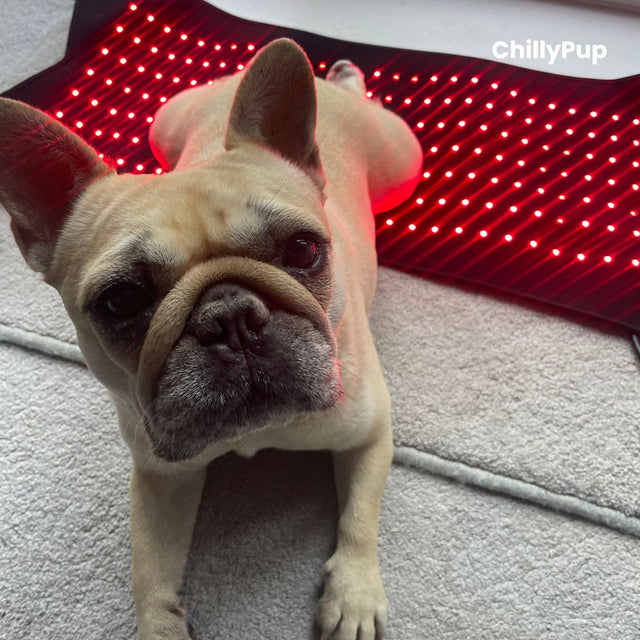
- Every evening: her Large Red Light Therapy Pad wrapped around her on the sofa while we watch TV, on the steady Constant setting. P1 or P2 most days, up to P5 on stiffer days, for 15 to 20 minutes. She is usually asleep within minutes.
- Achy days and days out: the Leg Wrap on her left back leg. It is cordless, so it comes with us when we are away from home.
- One specific spot: the Small Cordless Pad when one area is bothering her.
- Never all at once: one product, one calm session.
- The basics: keeping her lean, steady walks rather than long hikes, rugs on slippery floors, and steps up to the sofa, because she still refuses to be carried.
It is not a miracle, and we would never call it one. We started hoping it might make even a 10% difference to how comfortable she felt, and we are genuinely glad we did.
What other owners tell us
These are real reviews left by ChillyPup customers, quoted word for word with the photos they added. Every dog is different, and you can read all of our reviews on our reviews page.
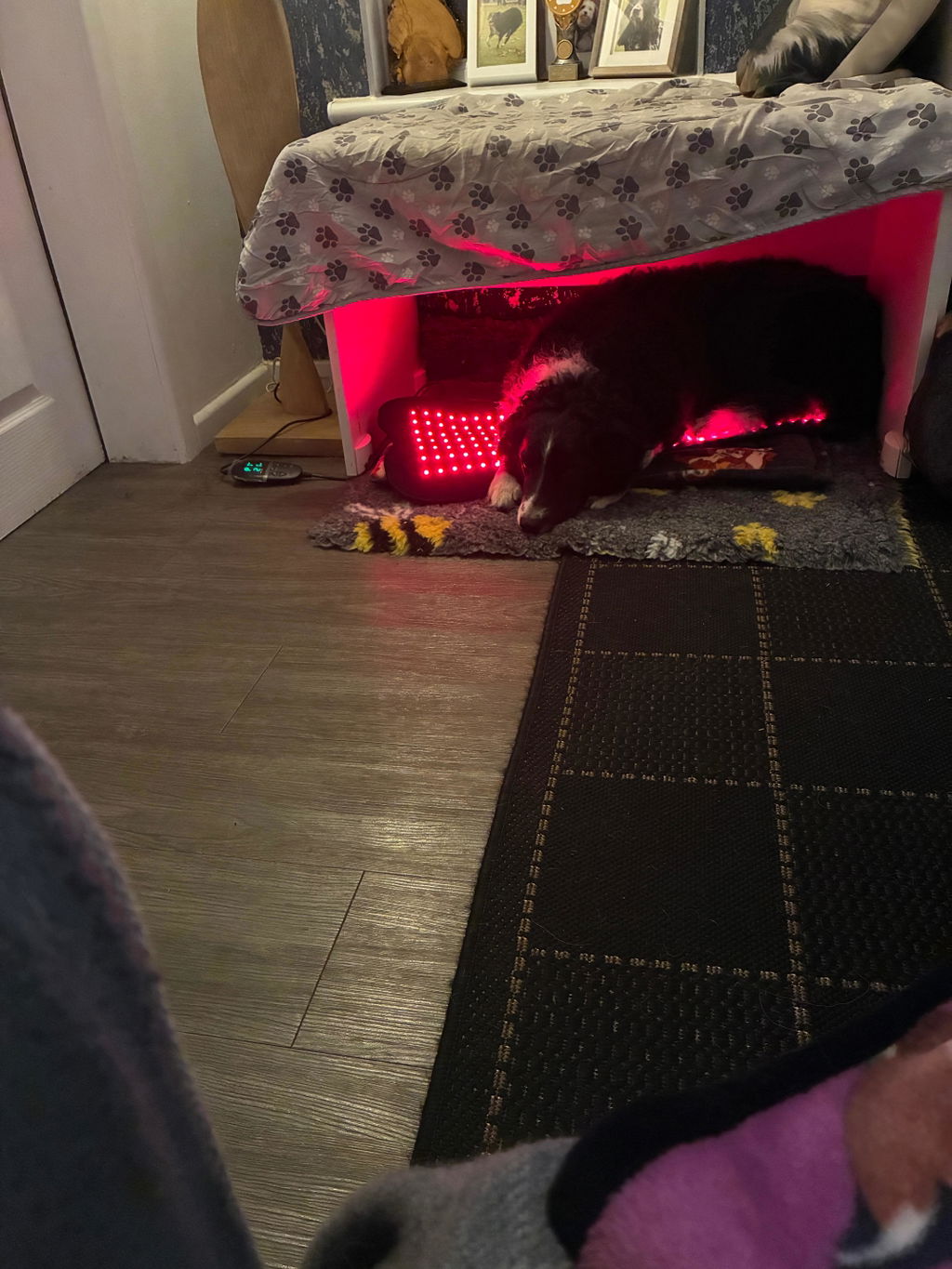
“She has had a few niggles and is under physio. But she is now happier competing at hoopers and is getting use to chilling on her mat.”
Nicola Leeks, Verified buyer, October 2026. About her Collie, who is under physio. Large Red Light Therapy Pad

“He is currently having hydro therapy too. He settles well using the mat once he has a frozen yogurt.”
Rossi, Verified buyer, September 2026. About his Shihpoo, who has a slightly lame back leg. Large Red Light Therapy Pad
“my dog has severe arthritis in his right leg, we use the pad on P1 for 20 minutes twice daily”
Jennie Head, Verified buyer, May 2026. About her dog's routine. Small Cordless Pad
If your dog is having surgery
If you and your vet decide surgery is right, recovery usually means several weeks of strict rest and lead walks, then gradual rehabilitation. Dogs given structured rehab after cruciate surgery, such as walking, swimming and massage, have been shown to have better leg function months later.[3] Ask your vet or surgeon before adding anything new to the recovery routine, and keep any device well away from the wound until it has fully healed.
Which product suits a dog with a cruciate injury?
| Product | Best for | Good to know |
|---|---|---|
| Leg Wrap | Wrapping directly around the knee | Cordless, 40 LEDs, up to 89 mW/cm², fits legs 14cm to 28cm around |
| Large Pad | A full-body evening routine, covering both back legs and hips | 210 LEDs, five power settings, up to 124.1 mW/cm² |
| Medium Cordless Pad | Strapping around the knee or hip of a larger dog | Cordless, 60 LEDs, up to 89 mW/cm², 20-minute auto-off |
Frequently asked questions
Can a dog live with a torn cruciate ligament without surgery?
Some dogs do, particularly smaller dogs, with rest, careful exercise, weight control and physiotherapy.[3] Larger and more active dogs usually do better with surgery. It is a decision to make with your vet, based on your dog.
Will the other knee go too?
It can happen, which is one of the things we weighed up for Mila. Ask your vet about your own dog's risk and what you can do to protect the other leg.
Is red light therapy suitable for a dog with a cruciate injury?
Many owners, us included, use it as a calm, comforting part of their dog's routine. Check with your vet first, and after surgery wait for your vet's go-ahead.
Does a cruciate injury lead to arthritis?
Arthritis in the affected knee is very common over time, with or without surgery, which is why the long-term routine matters so much.
See what Mila uses every day
Our full red light range: pads and wraps for dogs of every size, with free tracked delivery and a 30-day money-back guarantee.
Keep reading
- Luxating Patella in Dogs: Grades, Signs and Living with Mila's Grade 4 Luxation
- Why Are My Dog's Back Legs Weak? Causes, When to Worry and How to Help
- Arthritis in Dogs: Signs, Daily Routine and Where Red Light Fits
- Red Light Therapy for Dogs: A Dog Owner's Guide
Important information
This article is written by dog owners to share general information and our own experience. It is not veterinary advice, and our decision not to operate on Mila was made for her individual circumstances. ChillyPup products are designed to be a comforting part of your dog's daily routine and are not intended to diagnose, treat or cure any condition. Always speak to your vet about your dog's health and the options for their injury.
References
- Taylor-Brown FE, Meeson RL, Brodbelt DC, Church DB, McGreevy PD, Thomson PC, O'Neill DG. Epidemiology of cranial cruciate ligament disease diagnosis in dogs attending primary-care veterinary practices in England. Veterinary Surgery. 2015. RVC VetCompass summary
- Patella luxation and concomitant cranial cruciate ligament rupture in small breed dogs. Veterinární Medicína. 2020;65(4). Open access summary
- Fauron A, Perry K. Canine CrCL disease part 3: treatment and prognosis. Vet Times. 2017. vettimes.com